Episode Transcript
[00:00:00] Speaker A: Again, if one treats the individual alone, you have less success rate. It just makes sense. It's the same as taking a piece out of an engine and changing it and then putting it back in and saying, we've changed it, we fixed it. Why isn't it working? Because nothing around it has been adjusted.
[00:00:19] Speaker B: I'm Diana Earley. I know firsthand what privilege costs. Losing sight of your own path.
The isolation, the distrust and the guilt of feeling stuck in a life everyone thinks you should be grateful for.
Pressure isn't always the enemy. It reveals character. It challenges us. And it's something we all share. Rich or not, whether you built your wealth or were entrusted with it, sooner or later you have to ask, what is this for?
Welcome to the Pressures of Privilege show.
I met Judith about 10 years ago at a conference in London. I trained under her and she certified me as a recovery specialist.
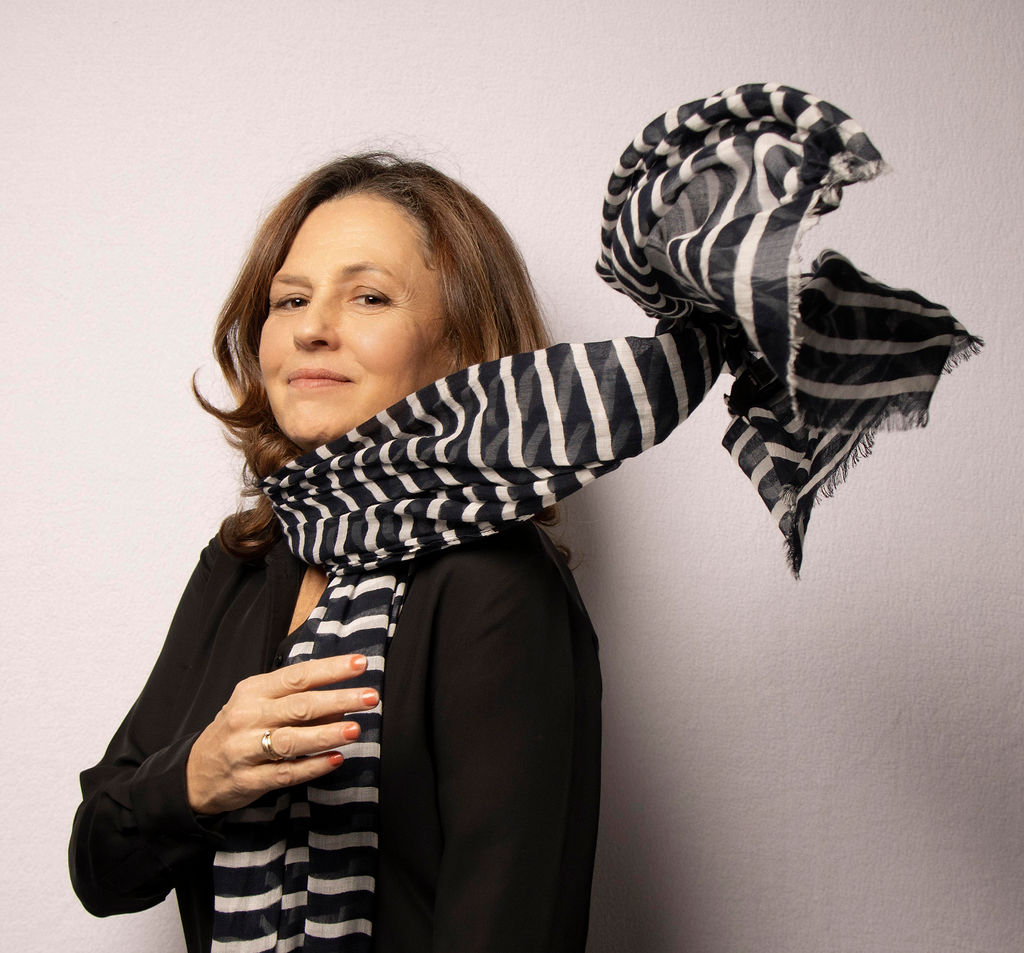
Since then, she's become a friend. Dr. Judith Landau grew up in South Africa during apartheid.
She's in the Apartheid Museum with Chief Albert Latuli, who won the Nobel Peace Prize.
A tight circle of family and family by choice kept her safe.
That became her life's work. She's a child family and community neuropsychiatrist. She coined the term Community Resilience.
She's advised the World Health Organization, the United nations and governments around the world. She created Arise, a way for families to invite someone they love into recovery. No ambush, no secrets. A lot of her field looks for what's broken. She. She looks for what's strong.
She created Link Community Resilience, which is working with whole communities and business systems. Judith, welcome.
[00:01:54] Speaker A: Thank you, Diana. It's lovely to see you again.
[00:01:57] Speaker B: Yes, it's been a while and since I last saw you. There's a new book
[00:02:02] Speaker A: which I'm very excited about.
[00:02:04] Speaker B: Yes,
[00:02:05] Speaker A: it's a passion project.
[00:02:07] Speaker B: Tell us more.
[00:02:09] Speaker A: Outside of my normal realm.
The title of the book is Intergenerational Healing through Past Life Regression. Family Hypnotherapy.
So working with whole families in hypnotherapy to explore where they come from, why they're here, what they have to achieve.
It's the stories of the patients told by the patients, which is unusual. Most of the past life books are written by the.
Well, the stories are told by the hypnotherapist.
This is their words and their stories with just a little summary by me and my co author, who came to me for hypnotherapy in the early 80s and then went on and became a therapist and a hypnotherapist and co authored the book Many, many years later.
[00:03:06] Speaker B: Sorry, I haven't read it yet, but I'm looking forward to reading
[00:03:08] Speaker A: it. It's just come out so early days.
[00:03:12] Speaker B: And we can get it on Amazon.
[00:03:14] Speaker A: Yes,
[00:03:15] Speaker B: well, going back, we've shared a house on Cape Cod. And you've spoken into our community in Newport. What did you notice about how a small town takes care of its own?
[00:03:27] Speaker A: Well, Newport is an unusual town in that there is a real sense of community.
I think small towns develop their own.
Their own characteristics.
And what impressed me about Newport was the collaboration across the different services and the way that people come together to achieve what they set out to.
And that's one of the potential strengths of small towns.
We have the same thing in Vail.
With a lot of community giving and collaboration across systems.
Some small towns run into trouble, but as long as they remember that they are a small town and that they're dependent on their neighbors, they can usually get through whatever challenges come.
And I find when I'm called into a crisis in a small town, it's so much easier to access the resilience and the stories across time and help people survive whatever the challenge is.
And I think one tends to lose that in big cities unless they form the smaller communities within their neighborhoods, which a lot of large cities do.
[00:04:57] Speaker B: So I remember after September 11th, I think. Didn't you work down at Grounds in the Lower Manhattan?
[00:05:04] Speaker A: Yes, I was called the day after 9, 11 by the state Department and New York City and worked with that Lower Manhattan community and was enormously impressed by how they all came together.
And so much of the creative work that came from them at that time is still there.
Art projects, music projects that really transformed that community and accessed their resilience and got them through the tragedy.
[00:05:41] Speaker B: It's interesting that you say art and music are part of the resilience.
I've instinctively thought of that. But what's the science behind that?
[00:05:50] Speaker A: Scientifically, our unconscious brain, our expressive brain, responds to trauma and to healing.
And music and art and the creative arts go straight to the unconscious brain and bypass our logical attempt to explain things away.
And so there's a primitive healing if we can get to that place. And what I found in communities around the world as an African traditional healer, when there is trauma in a tribe, they immediately go into Dansen Song. And the same with the Inupiats and Inlet, wherever one is in the world. And one of the things with. During the Kosovo war, the New York Kosovo community wanted us to work with them. As well, because they said we were doing so much work in Kosovo. But what about them? They're stranded away from their families.
And one of the first things they did when we started working with resilience was, was talk about the importance of sharing their traditional songs and dances with the children and the grandchildren so that they would maintain the culture and the healing.
[00:07:20] Speaker B: That's so cool.
And I was at Oxford, the trauma conference, the Bessel Fanacoch event. There was a debate going on between the doctors who believe that indigenous healing that includes these psychedelics should remain in the indigenous communities. And then there were some doctors who thought, oh, no, I should be brought into the medical community.
And as you're both, how. How. What do you think about this Western medicine and traditional African healer? Like, how do you hold both?
[00:07:51] Speaker A: It's a great question because my. My whole career has been bridging modern science with traditional healing.
But I have strong feelings about.
About psychedelics.
I've seen so much harm done, and there's no question that when they're used responsibly, they can really bring about healing.
But I'm seeing a lot of medication use of psychedelics without an adequate assessment.
And if people have a tendency towards, you know, have had a lot of trauma in their lives and. Or have a tendency towards compulsive behaviors like substance use disorder, they're really severely at risk.
And the psychedelics are powerful. And I've had the misfortune of treating a number of families where the psychedelics have become the drug of choice.
And I think that, you know, that can and should be avoided with adequate assessment.
But as with anything that becomes popular, the assessment becomes less central and everybody just starts prescribing it.
[00:09:13] Speaker B: Yeah, they do the ketamine in the United States because that's legal.
And then they go to Costa Rica or some other country or Peru to do the ayahuasca.
[00:09:24] Speaker A: But the ketamine, we're seeing so much ketamine addiction, and it's a very difficult addiction to treat. Yeah. I've probably just, during this year alone, treated five or six people with ketamine addiction.
[00:09:39] Speaker B: Matthew Perry died of that. Right. But it does help with some people with depression from an
[00:09:43] Speaker A: accident. Depression. Yes. If it's used properly and the person is assessed. You know, I would never have used it with somebody like Matthew Perry who was dealing with depression and who had been addicted to other substances.
So dealing with.
For depression, if somebody doesn't have a compulsive, Obsessive, Compulsive personality, fine, as long as it's done with rigorous control. And I think it's the same with, when one's bridging, bridging things.
One can't use the same method for every patient.
And the importance of doing a complete biopsychosocial spiritual assessment, cultural assessment is critical because only if one has really looked at the whole individual can one prescribe responsibly.
[00:10:45] Speaker B: How do the indigenous tribes do it? They don't have those assessments.
[00:10:50] Speaker A: Well, they do, they just do it very differently. The assessment is.
First of all, there is an intimacy in the tribe where the healer has probably been and depends on the.
Some tribes the healer is also the medication provider.
In many tribes they're two separate people. The spiritual healer or sangoma, which is what I am, and the itbiha, who's the medical person, the spiritual. They would both have been present at the birth of the child and watched that child growing.
So they know the family, they know the individuals.
And if they go off track, there's a meeting that usually starts with family and intimate circle. And then if there's an infringement that's larger, would involve more members of the tribe and if necessary go as far as the chief and the judicial council.
So if you think about a family doctor who used to, you know, I grew up with a family doctor who I adored. I remember when I was really. I had diphtheria as a 3 year old and was paralyzed for a couple of years.
And Dr. Avondale would drink the tea I made for my dolls, which Lord knows what herbs and garden things went into it. But the fact that he would drink that tea and have me feel like an important person as a little girl really meant something. And if you think about the tribal situation and the traditional healers, the families have grown up with them, they know them intimately, they know what should and shouldn't be used.
[00:12:49] Speaker B: While you grew up during apartheid and you had your family and your family by choice, what did that circle give you that you still use today?
[00:12:59] Speaker A: The sense of connectedness and safety. Because I was probably somewhere between 4 and 5 when I witnessed my first murder.
And all of us, as I was the oldest of 32 non blood siblings, regardless of whether parents were being put on a banning order where they were only allowed to have two adults and a room at the same time, or in jail, spirited away overnight or leaving the country, regardless of whether parents were there or not, there were always elders there to take care of us. We were never alone.
And there was a sense of belonging that I realized had got me through an enormous amount of Trauma. And I think part of it also was those couple of years of being paralyzed was being on the outside watching friends play and learning to observe. You know, as I started to work with people going through tough times. That and the sense of tribal connectedness that I'd had growing up in the tribal situations was that that connectedness to the larger system was what keeps us whole and connected, able to function.
[00:14:21] Speaker B: Yeah, because in your TEDx talk, you know that. I love that TEDx talk, by the way, the family stories, secrets and survival.
You talk about how trauma passes through families and you know, you've. The example you gave was a 13 year old boy who goes to America because there's famine in Ireland and he's disconnected from that community and how difficult it is for him. What made you want to tell that story?
[00:14:45] Speaker A: Well, I started when I was at medical school, the chairman, I was determined to become a heart surgeon, cardiac surgeon and started end surgery.
And the chairman of surgery got very upset because I was talking to the patients and their families and there was that sense that you've got to focus on the pathology and surgery. Surgeons cut, psychiatrists talk. The awareness that when people were admitted to hospital on their own, they would have a much harder time dealing with pain, whereas when their families were with them, the Indian, East Indian families would all come together very much like in Israel. They designed Hadassah Hospital with a large corridor behind the beds so the families could withdraw when the staff came to do around.
So there's that awareness that our connectedness is what gets us through physical and emotional pain.
And you know, I just kept relearning that lesson.
[00:16:03] Speaker B: And so when you told that story of that 13 year old who emigrated to Ireland on his own to send money back to his family, I mean, that must have just been so hard for that kid.
[00:16:16] Speaker A: Yeah. And I think what happens when, you know, very much the same with warriors and people going through mass disaster, they tend to be really brave and keep the stories to themselves and that creates a disconnection from. And the family does the same thing. For instance, with immigrants and refugees, the family don't share their hardship with the person who's left. And the person who's left pretends that everything's going well so they lose that connection.
And it's that connection that keeps them whole.
And it's as we lose that connection and become alone that we start looking for ways to relieve our emotional distress like substances and gambling and eating disorder and severe depression and suicide.
So the more disconnected we are, the more vulnerable we are to Physical and emotional mental illness. In times of trauma, we see a 30% increase in attention, addiction, depression, suicide, and physical heart and lung disease in communities that are going through mass disaster.
During COVID there were communities that were underserved, that went up to 60% instead of 30.
And during war Kosovo, for example, there was an almost 80% rate of substance use disorder in the adult men because they had no jobs, they had no way of making a living.
And it's the same with, for example, in Argentina with the disappeared, where people feel helpless and the loss of the loved one is an unknown.
So which takes us to Pauline Boss concept of ambiguous loss, where the hardest loss to deal with is the ambiguous loss.
So for example with her early work was with Alzheimer's, where the person was there, they weren't the same thing then with people missing in action.
And we're seeing an increase across the world of dementia right now, which is, you know, we're not sure what's causing it, but we know there's an increase.
What happens is that I did a study looking at relationships, family relationships with ambiguous loss.
And what happens is that my study was looking at people who'd, not with dementia, but people who'd had an acute head injury, which resembles very much the same as dementia.
But there's a sudden change in personality, particularly if it's affected the frontal lobe, frontal cortex, which is our thinking brain and the one that controls impulsivity.
People with an acute head injury tend to become more impulsive, much more likely to have mood changes and also personality change.
And what happens with that head injury is you're dealing with feels like you're living with a stranger.
And the person with the head injury also feels changed.
And so they start going into grief and mourning for losing the person that they were themselves and the person that they loved.
And that early grieving leads to an ambiguity in the boundaries and they really start losing each other.
Which is why when there's an acute loss in a family, like a death of a child, parents will start losing each other in that same way and go into premature grieving of their relationship.
So it's one of the things that maintaining that connection regardless of trauma is absolutely critical.
And I worry about trauma being treated by rote without a full assessment and without the context, because long term healing from trauma has to involve the people most intimately involved with that human.
[00:21:13] Speaker B: So you can't do it on your own without the other people,
[00:21:16] Speaker A: without doing something with the other people. Or you're increasing that boundary ambiguity.
And the grieving then Continues as they change.
The same thing happens with bipolar disease and schizophrenia that it's like living with a stranger when they're going through an episode.
And so treating them in isolation creates a greater distance and results in long term problems.
Treating people with their families and in context is really critical.
[00:21:52] Speaker B: You've been doing this for more than 50 years and what are you seeing in families today that's a little different?
[00:22:00] Speaker A: You know, families are families, but there are many more single parent families than there were when, you know, I mean, I went through a phase, of course, with apartheid where we were dealing with a lot of single parents or parentless kids.
But generally there is a much higher rate of single parenting and economic distress.
And so when we look at people in underserved areas, it seems to me, you know, this is not my field, but it seems to me that we have more underserved areas and less compassion than we used to because we don't have as much of the community. Neighborhood know, families are both families of wealth and families of poverty are separated.
You know, we have the underserved community where the parents are no longer able to be with the kids because they've got two jobs. And often kids have jobs. They're likely to be living far away from the grocery stores and the places where they would naturally be in community.
And so there's an increased isolation. And then with the middle and upper middle class, kids move away to college or they go off with their jobs. And families are no longer living in the traditional extended family, which had its challenges as well as its benefits.
But speaking as a grandmother, I hate that my grandchildren are spread all over the world.
[00:23:49] Speaker B: In Gstaad, where I raised my children, it was very common to see grandparents and multiple generations living under the same roof.
And then if a kid was sick, the grandmother would take the kid so the parent could still go to work. I'm seeing that now. It's hard to be, you know, now that I've got an aging mom, I don't like to be away from her. And then I've got a kid in California and it's like, oh, everybody's spread out.
[00:24:13] Speaker A: It's hard. It really is.
[00:24:15] Speaker B: It's a lot easier to be together.
[00:24:17] Speaker A: Yeah. We're not as aware if one of them gets ill or.
And they start, you know, they turn to their family of choice rather than to a family of origin.
[00:24:29] Speaker B: And then you hope that their family of choice is a healthy one.
[00:24:32] Speaker A: Exactly. Yeah.
[00:24:34] Speaker B: So you've trained thousands of people in arise. You know, it's a type of Intervention. I did your beginning training, so I, yeah, it was fun.
What do you hope people take away, you know, even if they've never run an intervention?
[00:24:49] Speaker A: Yeah, really, it's, you know, it was never meant to be an intervention. It was a continuum of care.
When we were doing the research, we fortuitously found that everybody was going into treatment.
And in those days I, well, I was thrown out of the psychiatry ward at one point as a resident because the chairman called me in and said that the nurses and the social workers wanted me fired because I was going into the homes of, I was supposed to be a child psychiatrist, going into the homes of the children and taking them for walks and meeting with the families and, and I was supposed to see the child and they were supposed to see the mothers. There's no mention of fathers or extended family.
And I was doing this crazy thing of working with a family.
So fortunately my training analyst was a wonderful Jungian who had been trained herself by Jung, she was Swiss.
And so I'm second generation Jung Jungian analyst. Fortunately, the chairman asked her to come into the interview and she said, well, I have to tell you that these children and adolescents are actually getting better and there's some of them who've had chronic eating disorders or depression and suicidality and whatever she's doing is working, so I don't think we should fire her.
And he said, well, the only thing I can think of doing with her without losing all my stuff is sending her to run the addiction unit, which was a hospital away from the main building and it was an old house and was 95 bed hospital and I knew nothing about addiction, but that was my job. And the first thing I did was ask the receptionist that when somebody called, worried about somebody in their family to say, come, bring them with you, bring anybody who loves them and we'll see what we can do together.
Only when I moved to the States and was asked by a dear colleague, Jim Garrett in Albany, to consult to his program and train them in family therapy, I discovered that it wasn't that in the States it was common for people to refuse to come to treatment if somebody else called.
So we did a quick survey, an international survey, had our students call around the world to treatment centers and. And we found that over 90% of them, if someone called asking about a loved one, they would say, we can't do anything unless they call themselves.
This was prevalent in the early 80s.
He couldn't understand why as I trained his staff, everybody was suddenly coming to treatment.
And I said, well, of course they're coming to treatment because they're invited to come, you know, with whoever it was that called.
So I had changed their intake method and I was just teaching them family therapy, not realizing that I was also changing their whole process to when someone called, come with the person and whoever cares about them.
And so we realized that this was that my way of doing family therapy. Transitional family therapy, which was the first integrative model of family therapy, was also helping within treatment engagement and it has influenced treatment centers around the world. Now, typically do invite the person to come and not just say, no, you can't, we can't do anything unless they call themselves.
[00:29:04] Speaker B: Plus, you have this 2.5 family member
[00:29:09] Speaker A: to bring about change. Yeah, we added up our numbers and if fewer than 2.5 were involved, an average of 2.5 were involved, there was less likelihood of both, not only treatment engagement, but also retaining them in treatment and long term recovery. So arise is a process that starts, can start with the intervention. It can start when they're discharged from treatment or relapse.
And it can be used for schizophrenia, depression, cancer, hypertension, where somebody is refusing to take meds.
But it's a continuum of care, making sure that not only the individual, but the family also get healthy.
Because again, if one treats the individual alone, you have less success rate.
And it just makes sense. It's the same as taking a piece out of an engine and changing it and then putting it back in and saying, we've changed it, we've fixed it. Why isn't it working?
It's because nothing around it has been adjusted.
[00:30:19] Speaker B: Yeah, no, I remember there was the head of psychiatry at Rhode Island Hospital, he called me, he said, diana, we get these people off opioids and send them home and then they're back again within a few weeks.
And it was very frustrating for him to see that
[00:30:35] Speaker A: there was a horrible intervention in the old days called parentectomy. I was horrified to find that some programs are using it again, where what happened was the staff found that when they sent the kids home or the patients home, they would relapse, as you know, as you're talking about.
And so therefore they should be hospitalized or the parents removed permanently instead of realizing that no one had to treat the whole system in order to bring about healing.
And there's a move in child psychiatry to bring that back, which absolutely terrifies me
[00:31:18] Speaker B: when you talk about like the 2.5 or equivalent of family members. Like there's that in a family, you have the family and then you have the friends and Maybe the coaches and the therapists. I think you call that the artificial network,
[00:31:33] Speaker A: the natural support system of the people in our family and our extended family and friendship circle, including primary care doc, people we see on a regular basis.
The artificial ancillary system is the people we get to see when we're sick or there's legal problems, the police have to be involved and so on.
It has to be the 2.5 of the natural support system, which can include neighbors, you know, a teacher, a sports coach, a sponsor,
[00:32:10] Speaker B: and somebody's friends.
[00:32:11] Speaker A: Yes, and friends, absolutely.
[00:32:14] Speaker B: And then you had this sort of. It takes five artificial to equal one natural. Right,
[00:32:19] Speaker A: Right, right.
[00:32:21] Speaker B: So if somebody doesn't have any family, I mean, they probably have friends or somebody in their environment.
[00:32:27] Speaker A: If we meet somebody who has, you know, five or more of the artificial. Artificial or ancillary system involved, then our primary job is to help to mobilize members of the natural support system.
Because even if we can get them healthy in treatment, if we send them back to an isolated situation where they're only people who are helping them, our artificial support system, they're going to relapse, you know, whatever, whether it's a physical or emotional disease.
[00:33:03] Speaker B: I remember you once said that even the homeless call home at least once a week. Right. To somebody.
[00:33:11] Speaker A: Right?
Yeah. And they know their addresses, you know, the family knows where they are, and they have their support system.
You know, they have their support system in their homeless community. Community.
Somebody will say, yes, I know which doorstep he sleeps under.
[00:33:30] Speaker B: Do you see addiction differences between. Or mental health differences between the people who don't have the resources and the ones at the top that have a lot of resources?
[00:33:39] Speaker A: Yes, because they start. The ones without resources start with a huge disadvantage.
Additional challenges.
And that doesn't necessarily mean financial resources, but one has to look at a whole map of resources, which include having access to health care, having access to healthy food without walking 10 miles.
Because if it's a lot easier and affordable to eat something that's not good for you.
In South Africa, they had a very high rate of death among infants and children, little ones, and realized that it was because of the protein deficiency that they were mothers would keep breastfeeding long after they no longer had much nourishment and, you know, would make concoctions out of sand and various other things because they didn't have the means to buy proper food.
And so they developed a particular cereal called Pro Neutro that was intensely protein that they could eat for any meal, and that was distributed across the country.
And the infant and early child mortality rate dropped dramatically.
[00:35:05] Speaker B: It's amazing. So food is really like, the quality of the food that you eat is very important in recovery.
[00:35:11] Speaker A: Yeah, it really is. It's also really important with children because if they don't have sufficient protein by the age of three, their brains don't develop properly.
So you're impacting the whole group of whoever it is that doesn't.
So when we think about our food deserts around the world where people are obliged to eat poorer, poorer food, they're compromising the intelligence rate of the children and their maturation.
[00:35:45] Speaker B: What about wealthier families? They can afford the good food and they can afford this stuff. But sometimes I've heard some mental health professionals say that actually the addiction rates are kind of higher in wealthy families because they're able to maybe get out of natural consequences.
[00:36:03] Speaker A: True.
And I think it's not just getting out of natural consequences. It's that a lot of the super wealthy families have much less family time and much less real connection because the families are dispersed all over the place and they're not spending time parenting kids.
Kids are given cars very early and are off on their own.
There's less accountability and less support. I've worked with a number of families in various parts of the world where there is no family dinner. If they're Jewish, there isn't a Friday night, or if they're Catholic, the Sunday, the Sunday dinner. Those simple connections fall away with.
With increasing wealth and people live in isolation from one another.
So even though the finances are there, the resources are there, there isn't that. Family connectedness and the connection to family and culture of origin is what keeps us healthy.
[00:37:20] Speaker B: Speaking about your new book, where I think it talks about life regression.
[00:37:24] Speaker A: Yes. Hypnotherapy.
[00:37:26] Speaker B: How would you explain this to a skeptic who's just like a science mind, science brain?
[00:37:30] Speaker A: Yes. Well, to start with, I think one of the things that I say very early in the book is that we're not trying to convert people or to say this is an absolute science or that past lives really exist. They could be a metaphor.
But just to give you a little bit of the history, when I was a medical student, I was very young and very naive. I went to medical school at 16, so I was a lot younger than anybody else, which meant that I wasn't burdened by a lot of the rules that other people tended to follow.
We were asked as medical students, we were trained to be to do hypnosis because we had a lot of young women, particularly from the Eastern cultures where the families don't talk about problems and the children are, you know, they're just not. There's no discussion of any emotional issues.
And there was a very high rate of young women, 12 to 16, being brought into the emergency room with what was then called hysterical. Now we call it dissociative blindness, deafness paralysis.
They had discovered that if one hypnotized them, they would be able to see walk here.
So we were trained to do hypnosis.
And so I did hypnosis on a couple of these kids. And then I said, wait a minute. I grew up in, you know, spending a lot of time. A lot of my friends were Indian.
I know Indian families go everywhere together. So I said to the young girl, well, is your family in the waiting room? Oh, yes.
So I said, well, let's bring them all in.
And so they all came in, and when I hypnotized her, they all went into trance.
And I work with a very light trance so that people can still keep talking and know what they're saying.
And they all went to a past life.
And it was, you know, I was amazed, but I'd had a number of experiences myself of feeling that I had a connection to a place or seeing people that I had been with in the past.
So it wasn't altogether a surprise, but it was still a surprise. So that I then said, well, when I'm going to do this hypnosis, I want the whole family. And many of them would go into past life and we were able to resolve. I could then say, this is what we're done in this situation, whether it's real or metaphoric, and it's just what the therapist needs to be working on.
[00:40:39] Speaker B: So something could have happened to an ancestor, let's say they lost a child, let's say, and there was grieving and that pain was handed down.
[00:40:49] Speaker A: Right.
Or they were somebody else. I mean, one of the people in the book was a lioness in a past life with losing an infant very much as they had lost an infant in this lifetime.
And going back to that experience, they were able to get through the grieving.
[00:41:15] Speaker B: Yeah, I think in today's society, grieving isn't really prioritize anymore.
[00:41:20] Speaker A: No. I did a study with a bunch of ministers across different religions when I was in my third year at medical school, because Kubler Ross was doing her work at that time, and we had her as a visiting professor.
And so I got my little ecumenical group together and we worked on.
And there really was very little done about Grief. And there isn't even today.
The hospices do a great job.
There certainly are ministers of the different religions who do a really good job.
But people talk about get through the grief.
They don't really allow time.
And people judge themselves if they're not healed very quickly and moving. You know, it's a vast society.
[00:42:16] Speaker B: I keep thinking of that Wailing Wall in Jerusalem. I wonder if that the purpose was for grieving. Right?
[00:42:22] Speaker A: Yeah, yeah. And for connect. Yes, it was. It was to connect, to connect with prayer. And it was a connection to the loved one. Because there's a letter written to, you know, the walls full of letters, let us talk to God and letters to the loved ones. In all of the original Judeo Christian Muslim belief systems, people believed in reincarnation.
And it was the Reformation that killed that because Richelieu realized that if people believed in reincarnation, they wouldn't recant in this lifetime because there would be another lifetime to come.
But you think of the Buddhist and all of the Buddhist cultures believe in reincarnation.
And the Judeo Christian group used to.
[00:43:15] Speaker B: Yeah, I think it was my dog in a former life,
[00:43:20] Speaker A: it may have been.
[00:43:22] Speaker B: And he was me. Like we've swapped.
[00:43:25] Speaker A: Well, and it could be.
[00:43:27] Speaker B: So someone who wants more after today, you know, in life, you know, maybe they're worried about a family member. They're, you know, where should they start?
[00:43:38] Speaker A: Depends what they're worried about. If, you know, if they're worried about emotional, you know, the emotional life, then finding a good therapist is always, always a good idea.
Talking to loved ones is critical.
And I think that's step one, because a lot of people go into isolation instead of talking to the people closest to them.
So I think one of the things to guard against is protecting one's loved ones from one's own feelings.
And I think we all tend to do that, particularly in Western society.
There is what I regard as an unnatural emphasis on being emotionally strong.
And to me it takes emotional strength to share honestly who we are and what we're feeling. And I'm not saying go overboard. One of the things that happens with single parent families is a blurring of the intergenerational lines and boundaries.
I'm not talking about a mother pouring out her heart to her child so that the child has to take care of her.
Almost moving not just to the parental role as a companion, but to a grandparent role taking care of the mother, but sharing that there is something going on and that one is taking care of it so that the child doesn't think that they've done something wrong because it doesn't matter how old we get, we still carry that little child inside us that is worried that we've done something wrong or that we're going to be hurting somebody.
So it's understanding that, sharing that there is something wrong, that it's important to share that we're doing something about it.
I'm not well that I'm seeing a doctor. Yes, I've been diagnosed with cancer, but I'm doing my treatment depending on the age of the child or the companion. Come with me. Come sit with me while I have my infusion.
Let's play Scrabble chess or whatever it is and share family stories.
So the importance of family stories I can't emphasize enough.
It's one of the things that we've lost with moving away from extended family, living together and the tribal stories.
I remember being deeply moved. I was teaching in Barrow, Alaska, which is way up north, northernmost part of Alaska.
And the group brought in a potlatch, which they needed every few. Once or twice a year.
And all of the elders danced, and then one generation after the next came and joined them. And you could see the family story unfolding. They were dancing the whole history of the. Of the tribe.
And, you know that these kids were part of this and learning those stories through dance and song from Tiny.
And, you know, that's a huge protection from mental and physical illness, having a time in the family where people come together and share their stories.
And I know I always have an argument with families when I say, bring the little ones to a family session.
And no, no, they're too small. I said, well, we can just talk about things that you feel good about. We don't have to talk about pain and trauma.
And the little ones are spellbound as they listen to the family stories. They'll sit for hours because there's a magic in that connection back through time, whether it's real generations or hypothetical or past life.
So the past life work is just an additional dimension that adds to our knowledge of family stories and our connectedness.
[00:48:15] Speaker B: That's so fascinating. You know, I have a daughter who's fascinated by indigenous culture. As a matter of fact, she's directed funds to the Wampanoag Language School in Ashby, Massachusetts. Yeah, and she's really supporting that. And then my mother had a history book done of the family. And in there, we found out that Roger Williams, who's one of our ancestors, actually wrote down the whole Wampanoag language.
[00:48:37] Speaker A: Wow.
That's amazing.
[00:48:40] Speaker B: Yeah. And he advocated for them and said, oh, no, they're not savages. They actually have a lot of wisdom and we could learn a lot from them. And it's. It's been very hard to convince my daughter that actually our white man privileged roots are not something to be ashamed of.
She comes from this. We're colonizers.
And there's a lot of self loathing as a result of being a white man.
[00:49:04] Speaker A: Yeah. And that's, you know, and that's the closest she can get to the Wampanoags and realize that that's a big part of who they were. And a lot of the tribes were pioneers.
You know, that's how they survived was by moving according to the seasons they had to pioneer. There's definitely a shame attached to being human. There are only three mammals that kill for fun. Polar bears, humans.
And it's one of the types of whale, and I can't remember which one hunt for fun. They kill each other. There's a shame attached to that. And I think it's good that she's owning it. The challenge is that we're not all one thing, that we're a myriad of different dynamics and histories.
And so you put them all together and we have it. This is part of why we need to know where we come from.
Because now she's learning that she's not just from the colonists, she's also from the tribes that were colonized.
So, you know, this is that we're all an amalgam of everything that we've been through.
And the joy of knowing those stories is that we then have a choice.
And we can choose who we want to be moving forward.
And we can only have that choice if we understand where we come from.
[00:50:37] Speaker B: Well, in the story, I think it says in the history book that there was a colonist who had bad character and he got drunk and he shot a Wampanoag by mistake. Or maybe he got frustrated and he just shot one. And that turned the whole tribe against the colonists, including Roger Williams, who apparently was brokenhearted because his friends turned on him. And that's when the war began between the white man. Yeah.
[00:51:04] Speaker A: But
[00:51:05] Speaker B: it was one bad egg who did an awful deed and changed the course of history.
[00:51:11] Speaker A: Right.
And we still tend to judge by the worst rather than looking for the good.
[00:51:19] Speaker B: I thought that was fascinating. And my daughter didn't know this history until after she directed that money to the school.
Isn't that cool?
[00:51:29] Speaker A: It was absolutely meant to happen in real life. In Jewish culture, we call it besher.
It was ordained. It had to happen.
[00:51:38] Speaker B: That's wonderful.
Well, thank you so much, Judith.
[00:51:42] Speaker A: Thank you, Diana.
[00:51:44] Speaker B: Is there anything else that I might have forgotten to ask you that you'd like to share with the audience? No,
[00:51:49] Speaker A: no, I think just the, you know, just the awareness that we. We do need our stories. We need to know where we come from and to be constantly aware that we each have choices to make and that, you know, we're not bound by the bad we come from.
We can choose the resilience and the healing
[00:52:12] Speaker B: that TedX talk. It's on Family Stories, Secrets and Survival. The Arise Network. Right, which.
And the Link foundation and then the International Recovery Institute or all of the websites that they can find.
[00:52:25] Speaker A: Right, yeah.
[00:52:26] Speaker B: I'll put those in the show notes. And your book.
[00:52:29] Speaker A: Yes. Yes.
I'd love them to read it.
[00:52:33] Speaker B: Yes.
[00:52:34] Speaker A: And I'd love them to contact me and share their stories. Thank you. I really enjoyed our conversation.
[00:52:40] Speaker B: Yeah, me too. Thank you, Judith.
If this episode landed for you, share it with someone who might need to hear it and click follow or subscribe on whatever platform. You're listening to this so you don't miss what's coming, because whether we have everything, nothing or something in between, we all face pressure. The question is what we do with it. So this week, look around your community and see where you can be of service.
Thanks for listening.