Episode Transcript
[00:00:00] Speaker A: I think consumers should own all their health data in one place, like your Schwab account. And then we can use AI to analyze it. As more stuff comes along, new tests, we can know exactly what's right for you and where you should be going. And for 10 bucks a month, and we get a billion people on this platform, we basically create a trillion dollar company that changes healthcare.
[00:00:21] Speaker B: I'm Diana Earley, and I've spent most of my life learning firsthand what privilege actually costs.
The legacy control, the family expectations. The guilt of feeling trapped in a life everyone thinks you should be grateful for. If you've ever wondered why having everything still feels like something's missing, you're in the right place.
Welcome to pressures of privilege.
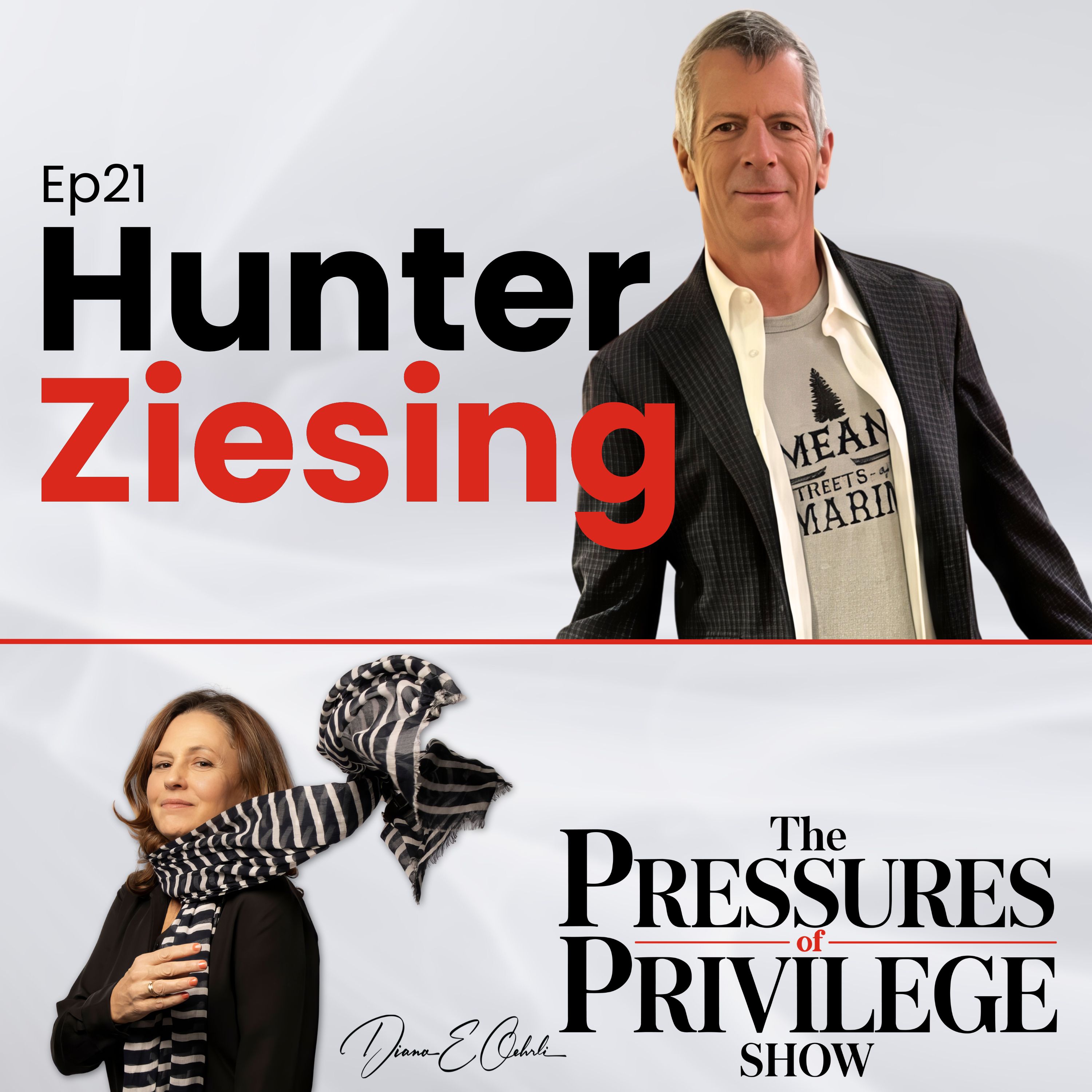
[00:00:46] Speaker C: Yeah, I wanted to ask you. So you're in the longevity space and you started this company, Longevity Health. And what prompted you to do that? I know that you had some, some, some, some. You lost your father, sadly.
[00:00:58] Speaker A: Yeah, he in his early 60s and I lost five friends to cancer related diseases. Not all cancer, but largely preventable diseases.
This is back in my 40s and I was on Wall street for 20 years and focused on healthcare, finance, consumer and technology spaces. So I had a little bit of background in health and technology.
I'd done very well in my 20s and 30s and was always into health and wellness. I was an avid cyclist, took great care of myself and was always sort of trying to get people to engage to. To be able to be more athletic and healthy like myself. So I would, I run these cycling camps and boot camps for my friends and get them out, you know, exercises, exercising and working out. Finally, one of my father passed away. That was the end. I left Wall street kind of abruptly at age 40 and I started a foundation called the Charity of Choice Foundation. And I put on large outdoor cycling events, centuries, or as some people call them, we call them grand fondos. And the beneficiary of the event, you had to fundraise it to be in these events. The beneficiary was cancer centers associated with Livestrom. Do you remember the Livestrong bracelet? So I knew Lance, Lance Armstrong.
[00:02:18] Speaker D: I knew.
[00:02:18] Speaker A: Yeah, I knew Lance very well because the founder of my investment bank was the founder of the US Postal Discovery team that Lance went on to win five Tour de Frances and love Lance or dislike Lance. He did a lot of things for cancer survivors to provide people the tools needed for when you were diagnosed with cancer. And I've always said, well, why hasn't anyone done any of that for healthcare? Right. Why is it we have all these tools and all this information out there and no one's really doing much with it. Your traditional doctor is more in the rear view mirror.
Our whole society is about after the fact. Rear view mirror versus prevention.
So for 15 years I just fundraised around cancer centers and then I went on to work for a, a large company called Paceline that developed an app that gave you incentives for exercising. We built out to a million users. I learned more about the data business in healthcare and sort of hacked with my own health. Then I met my co founder, Jesse Lebby, who came out of finance, the finance world as well.
And he was more of a real serious, you know, biohacker himself is. Both his grandfathers had heart disease and heart attacks before they were 50. So he got worried about his own health and he started doing a lot of research on functional health medicine and all the fasting that you could do and got all frustrated with the medical system itself and he, so he built Longevity Health and I joined him a year and a half ago and we built a very high end clinic for longevity.
And the be all end all is to turn that into something that's available for the masses.
[00:04:09] Speaker C: Wow. Yeah. And I looked at it and you. But it's mostly online, right?
[00:04:13] Speaker A: It's all online, yeah. So we, we start kind of with the thesis that spending fifty to a hundred thousand dollars a year going to a physical bricks and mortar clinic, it's good, but not everybody can afford it.
You can even go to Peter Attia, I don't know if you saw, he was on 60 Minutes last weekend. And I think it cost $200,000 to, to do a, a clinic. So we, we built what we call the billionaire bundle, which is, you know, it's a funny name, but it's, it's really to imply what a billionaire would get. And we charge $11,000 for the program, which is still not cheap, but it's an incredible value.
We start with why you have a conversation with a national physician, a real doctor. One of our co founders is head of emergency medicine at UCSF in San Francisco.
And you have an actual consult with the doctor and talk about, you know, Diana, why are you going through this, what, you know, what's going on in your life. And then we get into the how. And we start by doing a series of tests, including, particularly for any woman over 40, a DEXA scan. A DEXA scan is a sort of low impact, low radiation version of an MRI that does visceral fat and bone density and you know, osteoporosis in men and women over 60 is pretty common. We do a comprehensive blood test. We do a study, a VO2 max test, which is not just for athletes. A high VO2 is a very strong indicator of longevity.
We give everybody a glucose monitor and in some cases we'll DNA do DNA testing, you know, human genome sequencing if people want to, and any other tests that you might kind of want to have done. But we pay for six tests and then we analyze all your tests and we look at correlations between data between the different tests and figure out how to come up with a real plan.
So the next thing is, you know, it's the how, the what is the data and then the how. How we're going to go about changing your life, your diet, your behavior, and we give you this personal longevity board and we develop a plan and then we follow you on a day to day basis with lots of coaching and interaction. Everybody gets a slack channel. You know, half our patients are old enough are too old to have slack channels, but I know what a slack channel is and I can ping my doctor 24 hours a day, my clinician, my exercise physiologist, so that that program costs 11 grand a year. And then we retest every quarter to check your biomarkers.
[00:06:49] Speaker C: Oh, that's cool. The labs, how, how do they differ from the Function Health, you know, the, the Mark Hyman labs.
[00:06:55] Speaker A: Right. So that's part of the problem right now in the industry is there's so much conflicting advice and so many tests out there. They're great tests. Most of the companies out there with the tests in the marketplace, like Thorne Research or Function Health or Superpower, they sell you a test for $500, which they probably only pay $100 for. We pass through all our tests at cost and they often use those, those tests to sell you supplements.
And we're trying to sell clinical advice and change and to change behavior.
The functional tests that they do are more comprehensive than ours. They test 150 biomarkers, we only test 60. But we personalize the biomarker tests based on Diana and Hunter, not based on a mass audience because we think you have to highly individualize the data and the test to each individual. And they do a great job. You can get a lot from a blood test, but we think you need a lot more comprehensive longitudinal data. As I mentioned, some of the other tests.
[00:07:58] Speaker C: Do you believe in hrv, the heart rate variability?
[00:08:02] Speaker A: We don't do a ton with that at this point, nor do we do a lot with wearable data.
So Wearable data is great. I mean, it's, I think it's more good for social stuff and for.
[00:08:15] Speaker C: You mean this stuff?
[00:08:16] Speaker A: Yeah, accountability. Yeah, for accountability.
[00:08:20] Speaker C: I'm a geek hunter. I have both the Whoop and the Garmin.
[00:08:23] Speaker A: Well, I'll show you how I'm going to use that data to change behavior and build a trillion dollar company to change healthcare. We can get into that with AI, but right now it's all about changing using clinical data. Wearable data is great, but it's particularly glucose monitoring because that's hard clinical data. But the sleep data that you get on your rings and your watches is not really that useful.
We are working with a company called Within.
We're going to be using a mat that goes in your bed, under your mattress. Oh, and.
[00:08:58] Speaker C: Oh, they make scales, don't they, when they.
[00:09:00] Speaker A: Yeah, I have, I have the scale right here and I have the, I have the blood pressure monitor and I also have the, the, the mat that goes in my vet. And the reason we're using that versus Aura, and I think Aura is great.
I've used Aura, I've used them all, but they don't really give me anything clinically and they, they're not going for clinical stuff. So the within mat is a FDA approved mat. So if you have serious sleep apnea, we can prescribe GLP1s for treatment.
[00:09:28] Speaker C: I'm in a Mayo Clinic wellness coaching program right now and they touched upon the wearables and they agree that they're.
[00:09:34] Speaker A: Not that accurate, but over time we can use them. Are you familiar with Strava?
[00:09:41] Speaker C: Yeah.
[00:09:41] Speaker A: Okay, so Strava. I'm a Strava member. I know the founders of Strava.
[00:09:44] Speaker C: I alternate between this wearable being linked to Strava and this one. And when I go for a run, I use this one.
[00:09:49] Speaker A: It's a toy, it's fun, it's social. But my last company was called Paceline and we gave every. Everyone had a wearable like you do a Garmin, a Fitbit or an Apple watch. And each week you elevated your heart rate to 150 minutes of elevated heart rate, which is what the American Heart association recommends to be an active adult, frankly. Throw all this, throw all this longevity shit out the window because all you need is diet, sleep and exercise, Right? Forget my whole business model. That's really all you need.
[00:10:18] Speaker C: Well, you could add three more. There's. Lifestyle medicine has three other pillars of health which are reduced stress, positive social connection, and avoiding dangerous substances.
[00:10:28] Speaker A: Yeah, okay, that's pretty easy to do. Kind of.
But so when you got to your 150 minutes each week you get a streak and then the next week you did another streak. And like there are people going on like 200. The company been around a few years. 300 streaks, right. Like five year, four or five years of streaks. And we had like cancer patients bringing exercise equipment into their, into where they were getting treatment or people getting dialysis so they wouldn't, you know, get their heart rate up. Right. And like literally I'd be at 140 minutes on Sunday afternoon and I go walk the dog. Right. Or run around the block to get my minute. So we'd pay people a dollar a week to work out. Okay. People would fight to get that dollar. But more so than the dollar is people fight for social stuff.
And I want to eventually gamify this to create social accountability. Like, hey Diana, I noticed you've been traveling with your girlfriends in Europe for the last two weeks in Paris. I know you were behaving badly, right. Here's a little, here's a little bit of. Here's a reminder for you. Or like women's of Newport, over 50 with Osteoporosis Club, all start working out and lifting weights together. Right.
You know, fat men over four, over 300 pounds. When you get to 250, you get kicked out of the 300 pound group. Right. You know, we could, we could do a partnership with like Death Clock. I don't know if you're at Death Clock. It's this really funny app that tells you when you're going to die. But to essentially gamify it and make, make working out and eating and being more responsible about preventing crappy health fun and entertaining. You know, companies give in all the stuff. Gym passes, calm subscriptions testing. Nobody does anything with it. You need to change behavior by holding people accountable for it. It's not just about money, it's about engaging people.
[00:12:23] Speaker C: Yeah. I was thinking they should do a reverse fitness club model where the less you go, the more you pay.
[00:12:29] Speaker A: Yeah.
[00:12:29] Speaker C: And the more you. Yeah. And so every time you come, let's say you, it's $100 a month. Like let's say every time you come, you get a dollar knocked off.
[00:12:36] Speaker A: Yeah. So companies could do that. So, so we built, this is all B2C right now we're testing our AI platform. Eventually we'll, we're, we'll go B2B because I want companies to not just say, hey Diana, here's a, here's a gym pass. Like hey, here's Incentives if you use it more.
[00:12:51] Speaker C: I like that.
Well, gamifying helps, I think, with diet as well.
Are you familiar with the Cheat Diet by Jackie Wicks?
[00:12:59] Speaker A: I've heard about it. I haven't used it.
[00:13:00] Speaker C: Yeah, I mean, it's, it's a bit like Weight Watchers. You know, you're, you're adding up points, but she's sort of a hundred calories equals, you know, one cheat. And a cheat is anything that's defined that's not a vegetable. Yeah. So you're allowed 10 sheets a day and you kind of have to pick them wisely. And it's kind of cool. It's kind of. It gamifies it is what I'm trying to say.
[00:13:18] Speaker A: I got ahead of myself. That's the trillion dollar company. We have to walk, crawl, run. So the walk is the $10,000.
We've developed a product that's going to cost $1,000 a year, a hundred dollars a month using AI and AI takes a out a lot of the doctor work and it's actually, believe it or not, becoming more accurate than physicians. Now AI is not fully ready at it hallucinates. Consumers aren't ready for a driverless doctor may maybe in San Francisco because way more safer than, than than drivers. Right. But go to Kansas City and someone sees a wayo, they're going to run for the exit. But people still want a doctor in the loop. But we're using AI to take sort of the doctor out of the loop. So I have all of my medical records on our AWS secure server, which is part of our company. And I can call my AI agent. I'm going to call it right now and I can just talk to it and ask IT questions about my data. You there, Jesse?
[00:14:14] Speaker D: Yeah, I'm here, Hunter. Hey. We're checking in.
[00:14:17] Speaker A: Just checking in. I'm on a call with a friend of mine, Diana, when we're doing a podcast and I just want to sort of share what we're doing here. Could you just give me a quick update on my recent blood tests and my VO2 max test and what can I do to get my VO2 up?
[00:14:33] Speaker D: It's great to hear from you, Hunter, and hello to Diana. I'm happy to give you a quick update from your recent blood test.
We noted an elevated BUN to creatinine ratio, which can sometimes indicate dehydration or kidney strain. Your insulin levels were a bit low and there were some hormonal shifts, specifically with elevated at the horizon. We also saw a mildly low vitamin D level And a slightly elevated.
[00:14:57] Speaker A: Anyway, it'll go on and on, and when it's done, it'll send me a summary of the call and a plan and things that I should be doing. I don't know if you remember, if you're old enough to remember the movie her with Joaquin Phoenix.
[00:15:08] Speaker C: No, I'm old enough, but I don't remember it.
[00:15:12] Speaker A: He falls in love with the computer.
Oh, and these voice agents.
[00:15:16] Speaker C: A lot.
[00:15:16] Speaker A: These voice agents are getting better and better and better, and it'll. It gets to know you. So when I call back, it'll ask me if, like, if I had some knee inflammation, it'll say, how's your knee doing? Right. So eventually, I will replace your primary doctor.
[00:15:30] Speaker C: So is Jesse like your AI bot, but is also your CEO, correct? Your CEO is not a bot, right?
[00:15:37] Speaker A: No, no, no. That's actually.
That's a replica of Jesse's voice. You know, eventually you could choose your voice you want to. Sexy Italian, French voice, whatever you want.
[00:15:45] Speaker C: Oh, nice. Okay.
[00:15:47] Speaker A: Yeah. So you develop a relationship with it. It.
And it keeps track of all your conversations. And your initial conversation is really onboarding. It's going to say, hey, nice to meet you, Diana. Why are you calling me?
[00:16:00] Speaker D: Wow.
[00:16:00] Speaker A: I'm worried about this. I'm worried about this. I'm worried about that.
And I had this blood test come back and blah, blah, blah. And then it'll. It'll develop that dialogue with you. It'll recommend you to get additional tests. So this is what we're testing right now for a hundred dollars a month, which is incredibly cheap. You'll still pay for the majority of your testing, but instead of going to Function, Health and safety, spending $500 for a test, we'll give it to you for 90 bucks. And then we'll still have a doctor in the loop. So for the foreseeable future of physicians, you're still going to have a doctor. You could have your primary doctor, or you can use one of our doctors. You know, we're not going to do a procedure on you, but AI will catch a lot of stuff and hopefully a lot of preventive measures through this app. But we'll layer in the coaching and the recommendations and all that stuff. And then the future is AI only for 10 bucks a month. The AI will prescribe medicine, order lab tests, do all your coaching, interact with all your everything, your wearables, your Strava, all that stuff, your social stuff that I talked about. That's a couple years down the road.
[00:17:02] Speaker C: Okay, so the coaching is AI or do you have any live coaching.
[00:17:06] Speaker A: It's all live right now. But we're going to develop AI or what I really want to do longer term rather than just having all AI, people still want to have a physical just like a doctor. Instead of building this huge coaching platform, we'll just partner with all the best coaching platforms in the country or even regional ones like hey, it'll geo target you like next door and say here's five coaches in your area. Here's the one that fits you. My wife has osteoporosis. It took her forever to find a coach. She finally found one. This app will just automatically link to the. You know you want a man, you want to. It's like Teladoc.
[00:17:39] Speaker C: You said that if you were to follow all the longevity advice out there, you'd be taking a hundred plus supplements.
So what's broken in this space?
[00:17:48] Speaker A: I don't know if anything's broken. I, I applaud all these tests that are coming out. It's, I guess what, what concerns me is the venture capital community is funding a lot of companies that are vertically driven. Get a gut test, get a blood test, hyperbaric oxygen chamber. You know, they're, they're trying to, you test for something and then they want to get you down a product road because that generates revenue. We're moving more towards clinical outcomes and charging for it and it's not cheap.
And that's, I guess what's not broken that needs to be fixed.
The medical system out there today doesn't fully endorse all these tests. Insurance companies don't pay for them and that's something that we need to change. I don't think there's anything broken with the testing companies other than everyone's vertically trying to sell you something versus, you know, saying what is right for each individual and use all of your longitudinal data. And then I think we need to, once we can figure out what's right for you versus Hunter is how to get it reimbursed. We're not going to get it reimbursed unless we convince insurance companies or self insured corporations that we're going to change your behavior.
[00:18:58] Speaker C: How do you plan to do that?
[00:19:02] Speaker A: As I mentioned earlier, it's a little bit of a carrot and a stick. I mean you came up with a great idea yourself. Like the more you go to the gym, the less it costs.
[00:19:09] Speaker C: Yeah.
[00:19:10] Speaker A: The better you eat, the less the cost. How about we partner with Whole Foods? Right? Whole Foods is very expensive and McDonald's is cheap. Right. So let's Say you're driving down the road in your car and you're, you stop at McDonald's and all of a sudden your check engine or warning light goes on. Said, no, no, no, no, no, no, no, no. If you get down the street, here's 50% off this, this, this Healthy Joe's, you know, Joe's barbecue and salads, whatever. Or you're in the Whole Foods store and it knows you're diabetic, it knows you're, you know, tightly intolerant towards certain foods or you might be a vegan. And it develops a menu plan for you and gives you incentives to buy products from health conscious food suppliers that are giving incentives to consumer to buy their products.
[00:19:54] Speaker C: But it is true that intrinsic motivations tend to motivate people more than extrinsic. So what has helped for you in.
[00:20:02] Speaker A: That regard to motivate me?
[00:20:05] Speaker C: Yeah, like intrinsically.
[00:20:07] Speaker A: I already know. I just did my blood test and I had some issues. I have low bone density in my upper body.
My testosterone levels weren't as high. But I'm over 60 so that's, you know, I guess somewhat normal. I had some visceral fat, which shocked me, right, Because I'm like, I work out five days a week on a bike. Have I done anything about it? No. I'm busy building this company.
I'm eating a little bit better. I'm not drinking anymore. But have I been in the gym lifting weights? No. Have I changed my diet? No. And I fault my company for that. They gave me a plan because I'm in the, you know, more expensive plan. They told me what to do, but I don't do it. I need it. I need someone to do it for me. I need, I, that's why I really need that app. It's, it's telling me every day, have you taken your vitamin D? Have you, did you do your weights? Check in, check in. And when I don't, it's going to abuse me. It's going to say, hunter, you're, you're not. And I can adjust that. How obnoxious I want it to be. If I want it, you know, I could just turn it off if I want. Or like it's going to be pinging me during the day saying, did you do your steps? Did you do your workout? Did you do your weights? Did you, how did you eat today? How many cigars did you smoke today? Right.
So I think people need that.
[00:21:20] Speaker C: When you were cycling competitively, did you have that?
[00:21:23] Speaker A: I used a coach, but I love cycling so much. That I don't need. And I always tell my. My friends that are, like, trying to get in shape, like, I need you to go to the gym. I said, why don't you? Like, I hate the gym, right? So you have to find something that you love to do, right. But you also have to put yourself in a bit of pain for a while. Like, you know, if you hate broccoli, if you eat it six times, you'll like it. Right? That's the same thing with going to the gym or doing anything. You have to. You have to be repetitive to change behavior. But I think people lack the motivation.
They. It's.
[00:21:55] Speaker C: Yeah, I wonder. I wonder why.
[00:21:57] Speaker A: Because it's hard.
[00:21:59] Speaker C: Okay.
[00:22:00] Speaker D: Do you like.
[00:22:00] Speaker A: Do you like lifting weights?
[00:22:04] Speaker C: I like how I feel after.
[00:22:05] Speaker A: Exactly. But I don't know if you have done any bone density tests, but if you get one and you see your bone density is pre osteoporosis, you're probably gonna have to be more motivated to go work out, Right?
[00:22:19] Speaker C: Honestly, you wanna know what motivates me in the gym is when my trainer is like, oh, we're going from 22.5 pounds to 25 pounds. I'm like, oh, my God, I'm doing 25 pounds now. That motivates me. Cause I'm like, oh, my God, I've just gone from like £12 to £25.
[00:22:36] Speaker A: Yeah. So. But the thing is, the point is you need a trainer for that. And I think we're trying to bring this cost down and do it for the masses and change the behavior for masses. So AI can do a lot of that. You can have an AI coach, you know, reminding you, walking you through.
Anyway, I'm getting way, way ahead. But there's. There's technology out there. There's a company called Egym that digitizes all the weights that you lift and it coaches you as you go. It's pretty cool. But.
[00:23:01] Speaker C: But what about buddies? People could buddy up and say, hey, I'm going to meet you at the gym. Let's. Let's spot each other again.
[00:23:06] Speaker A: Social stuff, we need to build that in to create the motivation. I don't just ride alone. I ride with my buddies. We have ride groups, we have Strava groups. So I think we need that same environment to health for health. Because 95% of the people out there want to change their health. It's not that people always say, oh, Americans are fat, they're lazy. The food supply sucks. I mean, the food supply does suck, but I think a lot of it is they don't have the tools, the money or the resources or the motivation, the accountability. So we're building the, we're, we're building the tools.
We're working on the finances and they're coming down, testing's coming down. Now we need to sort of build in a mechanism to, to, to, to get people focusing on their health and doing something about it.
[00:23:57] Speaker C: Yeah, you've lived like two different lives, like the Wall street guy and, you know, and, and mission driven work. So which one's harder?
[00:24:07] Speaker A: Wall Street. Way harder. Yeah, yeah, yeah. I love making the money.
It was fun.
But this is way more fun.
I mean, I'm not a, I'm not a, you know, a do gooder. You know, if, if the plane goes down in the Potomac, I'm not sure I'm jumping in the cold water to save somebody, to be the hero that dies. But I, I love helping people that want to change their health behavior, get healthy. Getting them on a bike, going to the gym, working on their diet. I'm one of those people when, you know, a friend of mine, man or woman, says, you know, I don't look very good and I'm a little bit overweight, but I want to make a change, the first thing I say is, you look like shit.
Right? As opposed to like, oh, you look great, don't worry. I'm like, no, I just come right out and say it. Because that's what they need to hear when they want to make a change. If they don't want to quit, or they don't want to quit smoking or they don't want to make a change, then I don't say anything. I fly a lot and I sit next to a lot of people on airplanes and health always comes up and pretty. A matter of fact, you know, when somebody's next to me is taking up too much room and they want to change their health, that's the way I go about it. And when they do it, it's so rewarding to see somebody make a change.
[00:25:22] Speaker C: So what does doing well by doing good mean to you?
[00:25:25] Speaker A: My motto is live large, stay fit, which is kind of along the same thing. Live large isn't just financial, but there is some extent to sort of living your life every day. Producing something that gives you a return, puts meat on the table, but also not to get too caught up in your work. If I can build a trillion dollar company and make a lot of people wealthy, including investors and employees, while doing good for society, that's a homework. That's really my legacy.
This isn't just money for me. I want to help other people and would love to build a huge business by doing good for society.
[00:26:06] Speaker C: So this is aligned with your values 100% and maybe that's why it's more fun.
[00:26:12] Speaker A: It is. And I have a couple of very wealthy investors and one or two billionaires that have put money into this company and they don't need this. It's a rounding error for them. But they see the passion of what we're trying to create for people. I really think we can change the healthcare system.
[00:26:28] Speaker C: Where do you think the longevity space is heading in the next five years?
[00:26:32] Speaker A: There's going to be some turbulence. There's been a lot of money thrown into the space.
It's creating a lot of confusion in the marketplace. But I think you're going to see diagnosis and testing prices come down significantly as they already have. You know, blood tests we can buy for $90 right now. I would, I would never go pay $500 for it. I think you're going to see reimbursement change so that the medical system, including doctors, will have incentives to have people go get more than what you do for your physical exam. They'll start accepting some of this, these new tests. And then I think you're going to see reimbursement change.
I think companies will be first to start paying more for this functional medicine testing and longevity through the HSA plans. And then I think maybe it's 10 years down the road. I think Medicare will start paying for it because end of life care in America is something like $2 trillion a year and a lot of it could be avoided through better health span. I don't know. And we call this longevity health. It's really not about living longer, it's about living better. And people get sick in their, you know, 50s and 60s and they took a long time to die and they cost society a lot of money. And then when they're over 65, Medicare pays for it.
So it took my mother five years to die at all on Medicare. And you know, she should have, she was very sick the last four years of her life and that could have been avoided had she been on top of her health better. So I think five year, five, ten years down the road, Medicare is gonna support something like this.
[00:28:09] Speaker C: Yeah, it sounds like the whole lifestyle medicine field could be, you know, the six pillars I was talking about could align with what you're doing. Cause it's, it's all lifestyle related and prevent and prevention related.
[00:28:21] Speaker A: It is. And if you can you know, I don't know if we're gonna cure cancer, but if you can get in front of stuff through testing the. The outcome from the disease, and the cost is significantly less, as is your. As is your health span.
[00:28:35] Speaker C: Our country spends the most amount on its number one in healthcare spending, and we have some of the worst outcomes.
[00:28:41] Speaker A: I mean, the food supply sucks.
It really is. It really is cheaper to go to McDonald's for a family than it is to, you know, go to Whole Foods. The drug companies love us sick because they can continue to fill us with their. Their drugs. And then the. The healthcare system pays for sick people. Insurance companies get more money for a sick patient, but the insurance company coined it off my mom because they kept her alive for five years as sick as she was, and they just, cha ching, cha ching, cha ching, cha ching. And it's. It's just shocking to me.
[00:29:11] Speaker C: They say you're brash and competitive.
Is that true? You don't seem brash and competitive. Well, a little bit.
[00:29:17] Speaker A: I'm competitive on a bicycle.
I'm, you know, probably competitive with, you know, sports and friends. Just. Just for fun.
I love winning.
Brash. Yeah. I mean, look, I was on Wall street for 20 years. You had to be that way. You know, I was a. I was a salesman. I had to tell people what to do. And when I, you know, call up somebody and go, well, gee, I think you should buy Apple.
I think it's a great company. You know, it's. I like the products. I'm like, no, no, no, no. Like, I. I would literally just pound my clients into making decisions because I was. I worked hard, I was informed, I had good information, and I was very aggressive about getting people to do things. It didn't serve me well in the nonprofit space being that brash, but I had to sort of learn how to change my behavior a little bit.
[00:30:13] Speaker C: Are you still running that. That nonprofit that you started?
[00:30:16] Speaker A: No. No longer.
[00:30:17] Speaker C: No longer.
[00:30:18] Speaker A: Okay. Nope. I did that for 15 years.
[00:30:21] Speaker C: Yeah, it was a cool idea.
[00:30:22] Speaker A: Yeah. I actually built a business out of it, helping nonprofits raise money and awareness for cancer. As I mentioned, I put on those cycling events. But then I did build a company. It was very similar to GoFundMe, but it was very difficult selling to nonprofits.
That industry is very puritan based, wants everything done for free and cheap. Underpays their. Their employees. Unfortunately, everybody feels that nonprofits should have a low expense ratio. And I could give a shit about their expense ratio. Is what they do with their funding that they have left that whole industry should be turned upside down. I mean, why should you be underpaid to work for a nonprofit when you're doing good?
So it was very hard to get them to pay. And we were, we were charging 1% to 2% on the transaction processing versus GoFundMe, charging 7 or 8%.
But it was all paid for internally. It was very difficult to get the nonprofits to subscribe to the platform that we built.
[00:31:21] Speaker C: So what does cardio fitness have to do with living longer?
[00:31:25] Speaker A: Now you're getting into science and you're going to trip me up. But I just think, at least for me, I have a very high VO2 max. Yeah. And it's actually fallen over the last couple of years.
I just did my VO2 max test, and it was like six points lower than it used to be part of its age. And I'm not, I'm not cycling as much, but. And ask Peter Atia, any scientist.
VO2 High VO2 Max is a very strong indicator of longevity, and it's easy to change it. And you just have to do kind of some short bursts of intervals on the, on the, on the peloton or wherever your fancy is. Running, jogging. All right, I want you to go get a VO2 max test and a, and a DEXA scan right after the.
In fact, you might even want to try our beta. I'll send it to you. But it's AI longevity health me. That's the $100 growth program.
[00:32:17] Speaker C: Oh, cool. That sounds like fun. I should do that. I've done my Function health labs. I have.
I have some work to do.
[00:32:25] Speaker A: Yeah. And we would love to have those tests. So I really, I was giving Function Health a hard time because I give all these test companies that are hard time that want to sell you stuff. We just want to sell you longevity and behavior change and clinical data. So I need that blood test. So if you join our program, the hundred dollar a month one that I just showed you, with the AI plus human, you can download any test you had done, analyze those tests relative to other tests that we recommend. So we're going to get you a DEXA scan and a VR2 max test.
[00:32:59] Speaker C: So what do you think your father and your five friends would think of what you're doing right now?
[00:33:05] Speaker A: I look back and say, wish they had done the ones that could have prevented stuff. Like my friend's wife who died of breast cancer, who failed to get tests, ignored a lump on her breasts. She'd still be alive today. I think it's wonderful. I think One of them probably wouldn't have done anything that was the one that needed serious accountability changes.
And it's funny, I talk about this goal and this vision and everybody health is post Covid. Everybody is conscious about their health and they're doing things. But the truth is I don't think people are doing things. And this is where we really need to change that behavioral thing. We need to find those people that had the warning flags or find the warning flags and then do something about the warning flags. It's a major problem.
[00:33:52] Speaker C: What are some of the warning flags that you're seeing out there in your communities?
[00:33:56] Speaker A: I think what 93% of Americans are, have some predisposition towards diabetes, the metabolic illness. Yeah, it's incredible. Yeah, yeah.
[00:34:06] Speaker C: Because I mean it's true. I was thinking about the function health labs. You know, they give you an analysis of what to do but there's no coaching involved. There's no follow up, there's no accountability.
[00:34:17] Speaker A: Look, not the poo poo Mark Hyman. But I don't think any of these companies are doing anything to really change behavior. They're just telling you what, what's wrong.
[00:34:26] Speaker C: Hmm. Well that you could be the product of one in that.
[00:34:29] Speaker A: And that's why 10 bucks a month. My partner gets pissed at me when I say this because we're not a data aggregation play. But I think consumers should own all their health data in one place, like your Schwab account. And then we can use AI to analyze it. And as more stuff comes along, new tests, Gut, Bio vi, all this stuff coming out there, we can know exactly what's right for you and where you should be going. And for 10 bucks a month and we get a billion people on this platform, we basically create a trillion dollar company that changes healthcare.
[00:35:01] Speaker C: So what does getting stuff done mean?
[00:35:04] Speaker A: Get stuff done. It's just get shit done.
[00:35:06] Speaker C: Yeah. So you're good at that.
[00:35:07] Speaker A: They used to call me Labrador on the trading desk because there was a chain of destruction behind me. You know how the Labrador walks around the house and knocks everything over? But, but I have a good heart and I'm honest and I know I'm, I'm one of those people. My wife's the same way. Like when you come to a fork in the road, take it. I don't sit back and oh, should we do this and should we do that and analyze stuff and just, just go. And sometimes like I would always admire CEOs of companies that are people that built great things that they don't really, they're not super organized.
They're not super methodical. They just get shit done, you know?
[00:35:41] Speaker C: I like that. Isn't there a book about, like if you just make a decision and even if 50% of the time you're wrong, you're still going to be successful?
[00:35:50] Speaker A: Yeah. You can make. You can. As I say, you take the wrong course in the road. You just make it work.
[00:35:55] Speaker C: That's very cool. Well, thank you so much, Hunter.
[00:35:58] Speaker A: Really appreciate the time. And come down to the N tuck at any time.
[00:36:05] Speaker B: If this episode landed for you, share it with someone who might need to hear it. And if you haven't already, subscribe so you don't miss what's coming. But here's the real thing. I want you to know if you're carrying something you can't talk about. If you have every resource except someone who actually understands what wealth costs. I work one on one with people like you navigating exactly that. You can reach me at Diana O E H R E LI com.
[00:36:33] Speaker C: Thanks for listening.