Episode Transcript
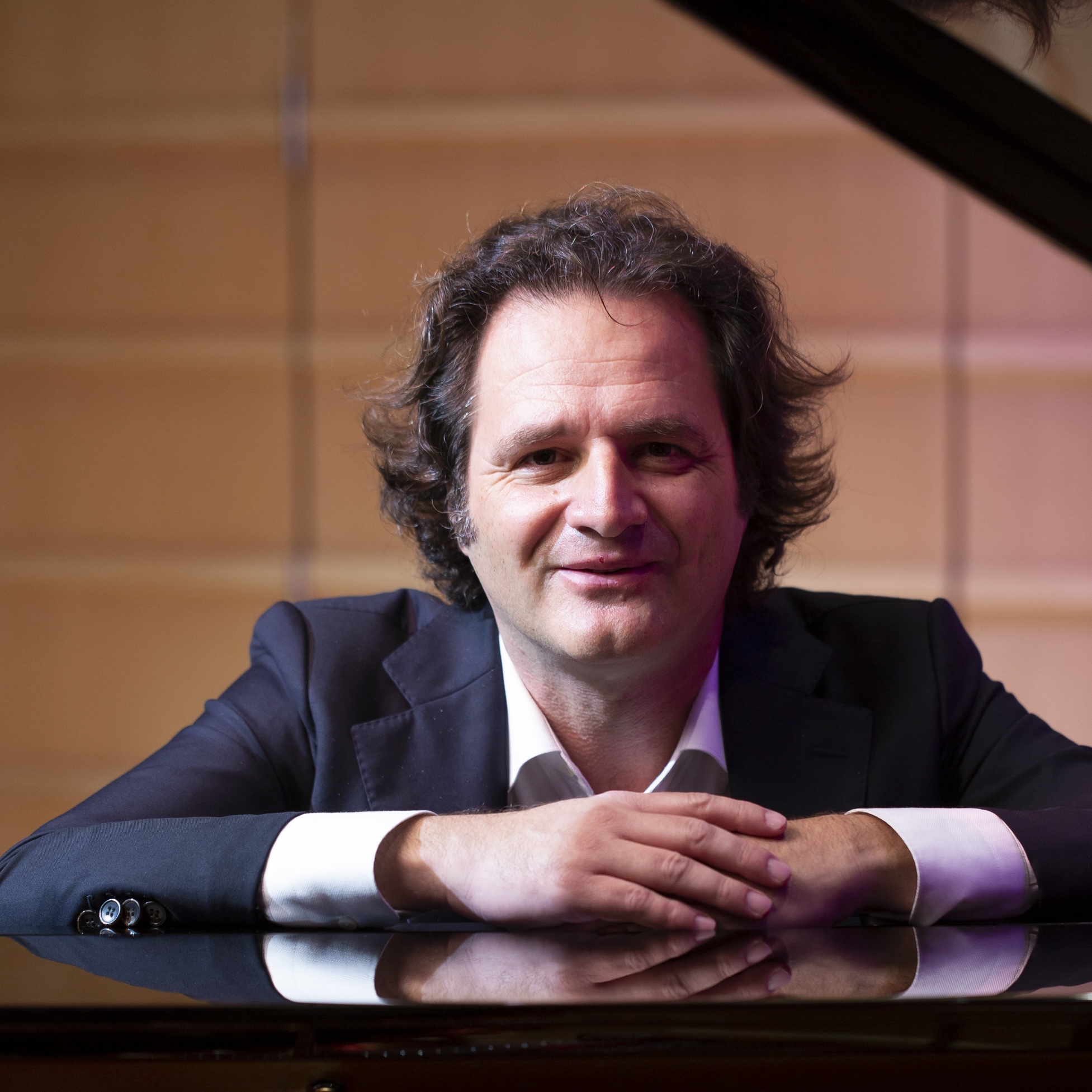
[00:00:00] Speaker A: I am so excited to have Gregorius Zamparas on the podcast today.
He's been my piano teacher since 2020, and I can honestly say he's changed the way I think about music and about letting go of control.
Gregorius is a Yamaha artist and a concert pianist. He's performed at the Newport Music Festival for years. He's the head of the piano program at the University of Tampa. He's performed all over the world and recorded several seven albums, including the complete concertos of Anton Rubinstein and Richard Strauss's Burlesque.
What I love most about him is how he teaches. He doesn't just teach piano. He teaches presence.
He teaches how to listen, and he teaches how to trust yourself when you're playing.
Today we're going to talk about what it means to really connect with music and how the lessons from the piano bench show up in the rest of our lives.
Let's dive in.
[00:01:04] Speaker B: I'd like to take us back to Greece.
[00:01:07] Speaker C: Yes.
[00:01:08] Speaker B: And to your teacher, Yorgos Manesis.
Did I say that right?
[00:01:13] Speaker C: Yorgos? Yeah. George Manesis. Yeah.
[00:01:17] Speaker B: How old were you? And.
And how did he recognize your potential?
[00:01:22] Speaker C: I was very lucky because he came to the conservatory in my hometown in Lamia, which is central part of Greece, two hours north from Athens.
And he came.
Someone brought him in my hometown to take charge of the conservatory, to become the director.
So that was when I was 12, I guess. 12. 12 years old. And I met him. I was just thrown into his class. He was. You need some students who can take this many students. I was one of them.
So I was not practicing much at the time. I didn't have motivation.
No, because my, you know, I'm my first teacher, you know, he was very good also, but she was, you know, not pushing me enough. I don't know. But then slowly, you know, he kind of discovered something in me, and I started practicing more. They told me at the same time it was a change in the conservatory, so he brought a lot of new faculties. So it was a revival.
He brought for theory, for history, for choir, for even for like an ORF system for little kids.
So he brought a lot of good friends that he knew from Athens, very good musicians and former students that he had.
So then he created an amazing atmosphere slowly. And I didn't. I was not aware of what was happening, but slowly I was part of this.
And I remember then another professor in teaching us theory and harmony, he told me, oh, you have perfect pitch. I said, what is this? I didn't even know. And, well, you can hear the notes. He was testing me, like quartal skills. I said, yeah, you don't, you know, I thought. I thought everyone could hear the notes because I was always. Could hear the notes.
And so slowly I was realizing my potential also because nobody told me I had perfect pitch, you know. So it was like a change in my life too. It happened at the same time. And then with Yorgos, you know, then after two, three years, it was obvious that because he made my technique so much better and my love for music even greater, then he would. He invited me to his summer festival in the south part of Greece where he would do for the summer concerts and master classes and every. Everybody would live together in an amazing place by the water there. The atmosphere was very nice too. So I went there and I felt something special when I was a little later in my life, 14, 15, but as a teenager, that really changed my life, you know.
[00:04:07] Speaker B: You've continued those festivals, right?
[00:04:09] Speaker C: Now we continue it. Yeah, it's us now that we.
Me and a couple of other former.
[00:04:15] Speaker B: Students in the same location.
[00:04:17] Speaker C: Same location, same house. And we have the little bungalows around the house and a concert stage. You need to come see it. Yeah. And I take now my students like a first circle, you know, he used to take his students and now I take students from here, from Tampa and, you know, students from Greece come. So we continue this because it's like, I feel like now I'm giving back to also Greece and to the place and to the audience there.
And I continue that tradition in a way. But I would like to come back. I mean, Newport is very special. You know, I spent 12 summers of my life there. 12 summers, 12 seasons is a lot.
And I was very close to the Malkovich family. And that was very special because it also had that family atmosphere.
Very good professors and not professor, I mean, pianists. He was not teaching festival. It was mostly concerts.
And so, I mean, I made so many friends and it was the atmosphere that was special. So maybe I'll come back and if.
If they do, I don't mind in the summer also to, you know, be there and then go to Greece. I mean, it doesn't really overlap, so.
[00:05:33] Speaker B: Ah, okay. It's different time. Oh, good.
So not everybody gets to have access to a mentor like, like the one that you had.
How can young musicians today find somebody like you or like him?
[00:05:50] Speaker C: Ah, well, you know, it takes, first of all, if you really love it, if you want to do it, if you have the passion for it, I think you will find the Right teacher or the teacher will find you. You know, somehow that's the only thing, to practice a lot, to really want it, to have the talent, of course.
And I think you can find the right teacher. And there's so many good choices we have in the United States. There's so many good teachers in so many universities. And now slowly I see more pre college programs and nice opportunities for high school students to study.
[00:06:29] Speaker B: What did your teacher say? That, okay, he told you you had perfect pitch. Did he say. What else did he say?
[00:06:36] Speaker C: Well, that was the theory teacher. And then Jorge was, you know, in the beginning he didn't say much, but slowly he would tell me that I had something special. But I was also very conservative in my playing. I was not overly expressive or anything.
I didn't like to push myself too much. And then slowly he will make me play a little faster, learn more music, not get too comfortable with things. He would throw me a lot of music for me to learn and to develop technique. But Jorgos was.
Yeah, I could feel that he.
He invested on me that I had something special also. And my memory was good, you know, I was learning music fast, I was building my technique.
And I had concerts already since I was 15 and 16. I remember we did our first tour together and we went to Bulgaria to play.
It was 6, 17 maybe, or 18.
No, 17 probably.
[00:07:41] Speaker B: You were in Bulgaria early?
[00:07:43] Speaker C: I played in the Sofia Academy. We met all these wonderful professors there, and he would bring them in the summertime to Greece to teach.
He had wonderful friends. And then I played with orchestras there many times after that.
We even went to Russia, I remember, to Moscow and to Samara Tulati, you know, really far east, took the train together, played Liszt Concerto.
[00:08:07] Speaker B: So when you were 15, a little.
[00:08:09] Speaker C: Later, maybe 18, but 15, 16, 17, 18, all of those years before me coming to the United States, I was. I started playing a lot and developing the repertoire and playing concerts, concertos.
By the time I was 17, 18, I knew at least 20 concertos. I think he believed in that, that you have to learn the repertoire and that's how you build up your technique. So. So those are all the good things. And of course, his teaching was amazing because he knew how to make it more relaxed, not tense, and how to flow and how to use, you know, natural movement, natural weight, as we say it, and prepare the fingers. Now I understand it. First I was exposed to it, you know, I didn't know exactly what was happening. I couldn't understand it very well. Now I can with my mind process it. And it goes back to the old schooling, all the old good school of music and the romantic school, the singing and the good physiology of the pianist like Rubenstein, or like many amazing pianists, they knew how to play without any tension and without too many movements and too like making a show like more. More serious approach, like Michelangelo or Horowitz or the great pianists.
[00:09:34] Speaker B: They were very smooth, very relaxed.
[00:09:37] Speaker C: Very relaxed and focused, concentrated, but interesting.
[00:09:41] Speaker B: You talk about being relaxed, but the amount of music he threw at you put you under a great amount of pressure.
[00:09:46] Speaker C: Yeah, but the more relaxed you are, the faster you learn. The mind works better if you're physically relaxed, if you're not tense. If you're tense, then can't think, your mind is not working.
[00:09:57] Speaker B: And the hand freezes up.
[00:09:58] Speaker C: Yes. And the memory goes, ah, that's.
[00:10:01] Speaker B: I think that's my problem.
[00:10:07] Speaker C: Learn how to breathe, how to relax.
And while we're playing, we have to have moments that you release the tension, relax.
[00:10:16] Speaker B: You know the famous tennis player Billie Jean King, she said pressure as a privilege when she was asked, why did she become so good?
And I was wondering for you, how does it apply to your life when.
[00:10:29] Speaker C: You have deadlines you meant to have.
[00:10:32] Speaker A: Yeah.
[00:10:32] Speaker B: Or having to put so much work into your craft to practice.
[00:10:38] Speaker C: When I was a teenager. Yeah. I mean, I didn't do anything else practicing piano, but I was motivated. And when I had in high school, I was, okay, I'm a knight. I was. Was a good student and I. I wanted to get into the university, so I had to study for the other classes because you have the exams to get into the university. But mostly I was focusing on piano. And, you know, it was a lot of pressure. Yeah. To learn music. And sometimes I was stressed. I remember I had things on my skin sometimes from the stress.
But you learn how to handle it if you don't do anything else.
[00:11:15] Speaker B: Yeah, well, you were giving up other stuff. You were giving up.
[00:11:18] Speaker C: Yeah. You give up other things. Yeah, but it's fun, you know, it's rewarding. Then I now I see that this is a time period that you have to invest a lot in music.
Later in high when you go to university, it's already too late. You have to really middle high school. You have to do the most of practicing and develop technique and reading, sight reading. Over the summer, I would play so much music with singers, with cellists, with other chamber music. After one summer, I remember it kind of clicked. My sight reading was so much better because I just read so much music.
[00:11:52] Speaker B: You know, that's A good tip for those who want to do that.
[00:11:56] Speaker C: Yeah.
[00:11:57] Speaker B: You talk a lot about wellness and how it ties to music. What is it your typical morning like?
[00:12:03] Speaker C: Well, for example, today it's been a good day. I was able to apply all of those things that I, I, I like to do.
Like to get up early and have my morning coffee. Actually, I did my morning walk at 6:37 20 around sunrise. I was out drinking my coffee, studying a score the sermon Symphonic Attitudes, which I practiced earlier because I, I like to spend some time with the music. Then I tried something on the piano before. And then I left. I came to teach.
And then after a couple of lessons here, I had some time to practice for an hour. And then because I looked at the music in the morning, I think I thought of the phrase and something and some technical things. My practicing was more focused, more. I was able to really do a lot in one hour, not even 50 minutes. And then I was time to go swim here at the pool.
[00:12:56] Speaker B: Really.
[00:12:57] Speaker C: The thing about the university, you have everything.
And I had my lunch and then I had a couple of lessons and now it's the podcast. So it's been the wellness is, it's important also to exercise for me, walking or a little bit of running, mostly walking and swimming. That's what makes me feel good.
In the past, I've done some yoga too. It's, it helps, but it's, I have to be careful with hands, you know, with my wrists and all that with yoga.
[00:13:26] Speaker B: Those Greek festivals that you mentioned have a lot of that nature swimming.
[00:13:31] Speaker C: Yeah, we do a lot of that. Yeah, we have free time. You're next to the water, you swim. Yeah, well, in Greece, summertime, there's nothing like it. Good food, if you take a little nap, you feel rejuvenated. But the swimming is just, the water is so beautiful and gives you so much energy.
But here we have the pool. What can we do? It's like you compromise.
[00:13:54] Speaker B: Do you find good food?
[00:13:56] Speaker C: Yes, absolutely. Well, I cook.
[00:14:00] Speaker B: Okay, you cook.
[00:14:03] Speaker C: Or Sana cooks? Sometimes.
[00:14:04] Speaker B: Yeah, yeah. Oh, that's so nice.
Many of our listeners are high achievers. Right. What parallels do you see between like the discipline of a pianist and an everyday mastery?
[00:14:18] Speaker C: Ah, I mean, you need to have some type of, I mean, you need to have discipline. For sure. The way you live affects your, the way you perform.
I can feel it if you don't eat well or if you eat too late, if you overeat or if you drink a little bit, you feel it the next morning. And as you get Older. And you? I do my best practice in the morning, so if I'm not rested, I cannot really practice well.
But the discipline is important and the quality of life, in a way, how we live, how we save our energies, and we channel the energy into something.
I mean, this is a sensitive topic. We have one energy, like how you channel it is important because I feel when I play is like you use something like the singers say you sing from the diaphragm. I think it comes from some. Somewhere in the stomach, lower somewhere. So it's that energy that is like the fountain. You have to. To be full in a way to give to the audience. And so we need to have some type, some.
[00:15:26] Speaker B: Some type of discipline for your daily life.
[00:15:30] Speaker C: Yeah.
[00:15:32] Speaker B: And how about performance? When you're performing? How does that differ? How do you handle performance?
[00:15:37] Speaker C: Well, it's in continuation. But the more you perform, then the easier it gets. It's just another opportunity to practice how I see it. If I have practiced well, if I have prepared for a concert really well, then I'm less nervous. But if I don't know the music as well, then I'm more nervous. But the preparation is more important. You see a big, amazing orchestra performing a conductor. It's the preparation they have done is so important. And then just the conductor is there. You feel like he's not doing anything but how he has rehearsed the orchestra. That's the most important things. How we prepare for a concert, what we do to practice. And then when I know a program and I'm performing once, of course, the first time, a new piece, you're nervous. But then the more you perform something you have played before, then it gets easier and more fun in the end.
[00:16:33] Speaker B: So what's harder? Teaching or performing?
[00:16:38] Speaker C: Both. I don't know. One, the other. And one complements the other. I mean, you become a better teacher by being a good performer and then better performer by being a teacher.
Things that I say to my students, then I realize, yeah, that's a good concept. I should apply that more also. I should do that. I should have my hand a little lower and relax my wrist. Kind of sink into the keys more, because I see them from outside and I see that they're not doing it enough. And then I realize, oh, maybe I'm not doing it enough. You know, I have to do that too.
And I change something and then it improves my sound or it solves a problem because I have explained it to a student. And then I realize, oh, yeah, that's how it works. I'm more aware of it.
Things that sometimes I do, but then I'm not realizing what I'm doing.
So when you have to explain something, then you. You apply it yourself.
So that's how teaching works. But. And when you perform, you know, I've had my best lessons. Sometimes after a performance, I'm like rejuvenated in a way. I'm renewed after a good performance. You have played a concerto or a piece that you like and then you.
You feel like.
I don't know how to explain it. You're full and you want to give what you have received from the audience and you want to give it to a student. So my best lessons sometimes are after a performance. But I'm not tired, I'm happy. And I don't want to practice, I want to teach. It's nice, it's part of the practicing.
[00:18:16] Speaker B: You've said that music is a spiritual journey.
And when did you realize that?
[00:18:24] Speaker C: Now more and more as I grow older and spirituality kind of is important part in my life also. Lift said that too. Technique comes from the spirit. So he. That's why he was so amazing to. To play all these amazing things. Because then you become a tunnel in a way.
But yeah, it is. That's why how we live, it affects our art, how we play, how we perform.
To have some type of discipline and schedule and think music and live music every day.
Spiritual experience. Yeah. Good music. Of course.
[00:19:05] Speaker B: In spiritual talk, sometimes we talk about surrender. We talk about acceptance.
Do you surrender on stage or is that a reach?
[00:19:14] Speaker C: You can, but you have to be also very active on stage too.
But sometimes you feel like, oh, you have it, the moment is there, like the sound is there. You can do anything you want. So I guess you just surrender, you enjoy it comes from somewhere.
But when that happens is special. Yeah. Wow.
[00:19:35] Speaker B: Does it happen a lot?
[00:19:37] Speaker C: I mean, I've had some moments, good moments. I remember.
[00:19:43] Speaker B: Can you describe a concert where that happened recently?
[00:19:46] Speaker C: I played in my hometown in La Mia. After all these years, after 20 plus years, I hadn't played there. And it was because of the audience. I think people knew me since I was younger and it was nice to see them again. And you feel the love from the audience. And I had programmed things that I know well and fun music that they wanted to hear, like Chopin, Preludes and Beethoven and list fun things like some Greek music.
So I felt like I was just.
Yeah, I was just.
It was flowing. I was like a channel or something. I was able to enjoy it.
[00:20:29] Speaker B: Yeah, that sounds great.
[00:20:31] Speaker C: Yeah, it was Nice. Yeah.
[00:20:33] Speaker B: Do you remember which song you played?
[00:20:36] Speaker C: Well, I played a full program. I was Chopin Preludes and then Appassionata by Beethoven, Opus 57 Sonata.
And then I played some Greek dances by Constantinides, kind of more traditional Greek music arrangements for piano.
And then list a set of different things, like even the famous Lisraum and Hungarian Studio Number six. And then I played as an encore, the Polonaz by Chopin.
[00:21:12] Speaker B: We worked on that.
[00:21:14] Speaker C: Yeah, it was. It was fun. Yeah, it was very, very beautiful.
[00:21:19] Speaker B: It sounds like a. A long program.
[00:21:21] Speaker C: It was a long program. I felt like he had a big crescendo at the end.
[00:21:25] Speaker B: Well, yeah, you must have been exhausted.
[00:21:27] Speaker C: We have kept. I mean, I was a little bit tired after the last piece, but I played, I think, too, encores. You feel like you're.
I don't know, you want to give more, you know, but. Yeah, you have to stop at some point. But it was nice, really nice. In Newport, I've had several nice experiences, especially with music that I knew well.
The Piazzola one, that was a fun concert. Yeah. With the seasons at the break.
The violin. Yeah, that was very nice.
Depends on the music. Also music that has.
[00:22:04] Speaker B: Yeah, it was my first concert back at the festival after many years and hearing, being in the audience. And that concert won me over.
And I didn't know you then, so.
Isn't that wild?
[00:22:16] Speaker C: Yes, it is.
[00:22:18] Speaker B: You succeeded in this very exclusive field. Now, what are some barriers that young people experience today? You think.
[00:22:30] Speaker C: Young people. Well, I think to find outlets for their art, like to find places to perform. That's difficult sometimes, but you need to perform a lot to really get the experience and to build up your technique, your stamina. And you're like an athlete. So if you don't perform, if you don't have performances, it can be more stagnant.
Same with conductors, you know, hard to find orchestras to perform.
That's why young artists, the young pianists go to competitions, which is good. You know, I just had the Chopin competition in Warsaw, and I watched a little bit of this, some videos. I mean, so much talent.
I mean, I see the.
But the thing is, do they have the repertoire? You know, when they're 20, 21, if they win a competition, can they really succeed? Do they have the repertoire to play a lot of concerts? Can they learn fast? You know, there's a lot of challenges, how well you're prepared. That's why it's important not to also win a competition too early in your life, and then you're not ready because then you can be like this and then go down fast if you cannot handle the pressure. Because there's a lot of pressure, like you said, and the nervous system has to be good.
[00:23:52] Speaker B: Yeah. So Jorge really helped you by throwing a lot of music at you early on.
[00:23:55] Speaker C: Exactly. I had good training. Yeah. I didn't do the competitions route, but I didn't take that path, let's say. But I did concerts, a lot of concerts. And you know, back then, you know, for no money sometimes, but it was just getting the experience. So those are some challenges, I think, to find places to perform and to play. Not just piano music, you know, to be more well rounded, not just to become a soloist, to play solo repertoire. You got to play a lot of chamber music, to accompany singers, to learn how to breathe, to do collaborative things. Because you got to be a more like well rounded artist. You got to be able to do everything and then everything gets better.
I mean, I don't agree that you can only be a chamber music pianist or you can be only a piano soloist killing concerts.
You gotta be able to do everything. If you can just play solo repertoire and you cannot play chamber music, there's something wrong there means maybe you don't have good rhythm, so you cannot play with other people. You do too much rubato all the time, or you play, you take too much liberty.
So you don't have the discipline to play chamber music, to play with good rhythm, to play in time.
But it's part of the training.
Chamber music is so important. You learn to listen so you can be together with the people you're playing with.
That's another challenge, to find people to play with, to do collaborative things, not just to go to competitions and play the same repertoire.
Yeah, very talented pianists, they just do competitions.
They have a very small repertoire and they will win eventually because it plays the same thing over and over. But then can they have a career? Do they have the repertoire? Do they have the training? Can they learn fast? Can they read music really well? Or they memorize a lot and the reading is behind.
You never know. There's a lot of challenges because I teach now so much. I see the different needs that students have.
[00:26:08] Speaker B: What percentage do you think of your students are going to go on to being musicians professionally?
[00:26:13] Speaker C: A small, probably percentage because I'm in a smaller school, I'm not in one of the big conservatories. But even in big conservatories, these young musicians will end up in music professionally. But it's very important to have that education.
They may do other things.
Or they may teach, or they may run a studio, or they may do science, something different. They may become doctors sometimes this change a career, we never know. Or a finance person. But because they're musicians, they can do that really well. I think. You know, when you're in music, you learn how to think differently, how to cultivate your emotions. It's the mind and the heart that work together in music. So then you develop in a different way.
[00:27:01] Speaker B: Yeah, talk more about that because that speaks about the wellness part of life.
[00:27:08] Speaker C: I think we are like the triangle is the mind, the heart and the will. So we have to have a mind to think. And then we feel it, we really want it, we desire it, and then we have to act on it. Otherwise it just stays.
[00:27:22] Speaker B: Like an aspiration.
[00:27:23] Speaker C: Yeah. Not materialized.
So in music you can do all of those things. You work with your mind, learn music and work with your emotion. You're like an actor playing a role.
Gotta play music. It's intense emotional experience. Many times you play list, it's like so much drama inspired by all of this. Stories like the Faust story, or Dante's book, the Divine Comedy and so on, or Petrarch sonnets.
And he wrote program music. So he's inspired by something, an intense story. And then he expresses emotion.
His goal is to express the emotions, not just to describe an event, but at the same time is a very intellectual piece of music. Because the structure, how he writes music, he has his own structure from the symphonic poem, let's say, thinking of the list Sonata. So it's like.
And then what he wants to express. So it's both the mind and the heart. And then of course you have to have the will to practice and play it and learn it. So it's amazing. You develop as an individual. You know, you can develop your will not just by being a good athlete or by.
Yeah. Going doing the training or going for a run, but by playing the piano. You know, we do the same thing.
They say I gotta get stronger. You know, do your push ups or do this many miles or do the fasting, the nutrition, this, that. But in music we have the opportunity to do all of that.
[00:29:05] Speaker B: It's a way of connecting with your.
[00:29:06] Speaker C: Heart, your heart, your mind, everything.
[00:29:10] Speaker B: Have there been times when you haven't wanted to touch the piano?
[00:29:13] Speaker C: Yeah, of course. Take a break. Yeah, yeah, yeah.
Intentionally. Like to be on vacation. But then you miss it, you know, then you feel like something's missing. And sometimes when you have difficult moments in your life and you want to just take a break or because you feel like you don't play well or you're not sounding good or you don't want to do it. And sometimes because you're, You're. You're a little down, I'd say.
But sometimes it's also because you have had enough and you need a little break.
Just when I read a book and go for a walk, go swim, and sometimes it's healthy, it's good to vacation.
[00:29:50] Speaker B: The founder of Shotokan Karate said, never bring your karate to a boil. Just keep it simmering.
And I was thinking about piano. Like, if you bring it to a boil, you burn out.
[00:30:02] Speaker C: Burn out, yeah. There's been cases in the past, and big artists, they hadn't played in public for many, many years. Like Horowitz got burned out a little bit, or who knows, nervous breaks down, or he was starting to get too nervous or he needed the break or we need those breaks sometimes so we can mature more, we can bring something fresh, something new in our playing.
[00:30:27] Speaker B: Marta Argerich took breaks.
[00:30:29] Speaker C: Yeah. All the big artists, you know, especially then when you are famous like them, they were. They were so famous.
And you're always under the pressure of the audience that want to hear you all the time. You need to take breaks to also learn music and to have time for yourself. It's like sometimes you want to take a break from social media or the cell phone or emails or everything. Just want to be out in nature, you know, to recharge.
[00:30:54] Speaker B: Speaking of Martha Ergorett, she's a lot like you.
[00:30:56] Speaker C: She.
[00:30:57] Speaker B: She always said she felt lonely being a soloist.
[00:31:01] Speaker C: Oh, many times like that. They need to play with other people.
[00:31:05] Speaker B: I think she was really young. She was more of a soloist. And then later it was all concertos.
[00:31:09] Speaker C: She's doing a lot of collaborative things and it's wonderful, you know, you feel that exchange of energies and ideas and keeps it fresh. I love being able to play chamber music. And here at the university, we're doing a lot with chamber music. Yeah.
[00:31:25] Speaker B: So you don't miss Greece too much when you're in.
[00:31:28] Speaker C: When I'm here, yes and no. I mean, I do, but I'm so busy.
I get to go back, though, often. And I like, now I'm doing more music things in Greece, more artistic things to teach over there and play a few concerts. Nice to be in touch with the young musicians in Greece, the music scene.
[00:31:52] Speaker B: You've talked about wanting to. You love giving back. You say you get from the audience, you like to give back to your students, but you also Do a lot of pro bono teaching.
Can you talk about it?
[00:32:03] Speaker C: Mostly in Greece. Yeah.
Here also summer time, like summer camp.
But in Greece.
Yeah. I think it's important to give back to. Like in my hometown I did that to not to do it for money and just to. Because I'm there, I want to listen to the young students and it's my pleasure to. And gives me something to do and. But it makes me useful to them.
And.
Yeah, in Greece I like to do that, to do those master classes. And I'm lucky that I can do it because I have a job, I have a salary, so it's easier for me to do that in my hometown. Last summer I heard a couple of very good students. Yeah, yeah. And I heard a very good student who is now in the university in the north, in Thessaloniki. He was really excellent. So there's a lot of good talent in Greece.
I'm amazed. There's a lot of really and good teachings that is happening in the conservatories and the universities.
So it's happy to. I'm happy to.
To see that.
[00:33:14] Speaker B: You know, I was going to ask you. You love to come to Switzerland?
[00:33:20] Speaker C: Yeah. Well, it's a lot of beautiful nature there.
[00:33:25] Speaker B: Do you want to speak about the. Is it. What was his name?
[00:33:28] Speaker C: The philosopher? Yeah. Ivan Omram.
Yeah. I have the connection to. Through Yorgos, my teacher.
So he.
He was a disciple of Ivanhof. And there's spiritual centers in. Around France and in Canada and Switzerland. And I have good friends in Switzerland. And I like to go because it's up in the mountains, so it's so inspiring. And there's a beautiful piano. So I go there and I play for the people there to spend a few days for New Year's and the first days of the year.
And it's very nice because you get to do music, read a little bit of the books, listen to a lecture.
The atmosphere is very special.
I like being on the mountains because I live in Florida, so there's no mountains here. So I can't wait to go back to Europe to a place like Switzerland and experience a little bit of that.
[00:34:30] Speaker B: Those are the mountains overlooking Lake Geneva.
[00:34:32] Speaker C: Exactly.
[00:34:33] Speaker B: Yeah.
[00:34:34] Speaker C: Oh, yes.
[00:34:35] Speaker B: Near Montreux.
[00:34:37] Speaker C: Yeah, exactly. You know.
Yeah.
[00:34:39] Speaker B: And I know I've never been to that place, but I know the area.
[00:34:43] Speaker C: Veve is beautiful. Yeah. I miss Europe in general and the culture there. That's my connection there.
That's with my spiritual need and quest. And to invest a little bit on that is good. That's how I know about the Mind and the heart and the will, you know, and how the structure of a human is also. He has explained it so well, and about the different natures, the two natures that we have. The lower nature, he calls it a personality. We all have a personality that is so intense and make us do things in a more selfish way or desires and all that, and our egotistical thoughts. But at the same time, we have a higher self, which is more of our spiritual self or our higher ego, like higher self. The individuality, he calls it.
So this is then when you. When I perform and I feel like I become a medium, my channel is like, oh, maybe that's it. It plays. What do they get? The Germans call it something S Pill. Right.
[00:35:49] Speaker B: A spirit. Yeah.
[00:35:53] Speaker C: So that's beautiful because you asked me earlier when that happens. It's very special because then you feel. You surrender, like you said, it's not you anymore. And something higher. And then.
And that's when you start the idea of loving everyone. Right?
The spiritual love, more disinterested feelings, less.
[00:36:21] Speaker B: The hedonic kind of.
[00:36:23] Speaker C: Exactly.
Less ignoring and more the spirit in you.
So that's what has helped me, that teaching of Ivanhoe, to realize how we are as humans, you know? And then he's not the only one has talked about those. These things, you know, Many other great masters, great teachers have talked about that, maybe in a different way.
[00:36:47] Speaker B: Well, I know a painter who talks that way.
[00:36:50] Speaker C: Yeah.
It's interesting to read how it's presented throughout the centuries, throughout the years, you know, thousands of years, all these great things that exist.
[00:37:01] Speaker B: And he says he doesn't control the paint.
He doesn't know what controls the paint.
[00:37:06] Speaker C: Exactly. Yeah, well, when you see Michelangelo's David, how did that happen? And then it's. It feels like it's alive. You go see it and it's there. I mean, it's like so expressive.
It's. Those are the works of the spirit, you know, they're eternal. You see the Parthenon, it's amazing. There's nothing like it, you know, you cannot imitate it. You see great paintings, you know.
[00:37:33] Speaker B: But that represents tens of thousands of hours of practice, right?
[00:37:37] Speaker C: Exactly. Yeah. Of course. You have to do the work.
So then becomes. It flows through you, then it becomes effortless. But you gotta develop the technique, like as a pianist, to know how to treat the body in a way that is more relaxed. It doesn't get in the way. We're not tense or then. So it flows like. I remember Bruce Lee used to say, martellarts you mentioned it has to. What is it? Be water, my friend.
To be. You have to be like water. It has to flow.
So everything is connected in a way that's so cool by Bruce Lee.
Bruce Lee and I get inspired by tennis players, like you said, like when you watch feather hockey plays, they always follow through. That's how you. You play the piano. You know, you play a chord and then you let the movement continue. You follow through. You don't stop.
[00:38:35] Speaker B: You and my karate teachers say the same things.
[00:38:38] Speaker C: Exactly.
[00:38:39] Speaker B: Exactly the same things.
[00:38:40] Speaker C: Principles, right. That's how you play the piano. So then forever, you don't have any bad tension, bad tendonitis and injury.
That's why, you know, people like Rubinstein. Arthur Rubinstein is the best example. He kept playing and getting better and better and better in his 80s. His best playing was when he was 70 and 80 years old.
[00:39:04] Speaker B: He's always criticizing the people in our dojo who are trying to add power with just superficial power.
[00:39:11] Speaker C: Yeah. No. And then you force it. But the power has to come from the speed, from the weight. It's physics also.
And the release.
It's very interesting. It's very good because it's the science and the wisdom also makes you more wise because you. You try less hard in a way, to achieve something beautiful.
Physically, I mean. Yeah.
[00:39:36] Speaker B: Well, he talks about prep as well. Like, you prep.
[00:39:38] Speaker C: Prep. Yeah. You prepare. Yeah. The conductor has to prepare. You know, Maria Kalas used to say that you always prepare the sound before you sing, and you have to have it already prepared. You have to know. You have to hear it in your head before you comes out.
It's interesting. It's a spiritual experience in that way, you know.
[00:40:04] Speaker B: But it's funny you mentioned Maria Callas, because at the end of her life, she was quite miserable.
[00:40:09] Speaker C: Well, yeah, because of.
She had a very sad life. Yeah. At the end. Yeah. A lot of things happened.
Relationship with Onassis and Kalas was a very sad story in the end. I mean, what a talent. And then she lost her voice, and that cost her life. I mean, she couldn't handle it, I think. Became so depressed. You know, the story that she was in love with Onassis and she started doing all of these things on the boat and being in the sun maybe too long, or going out to receptions. And she loved Onassis and she thought that Aristotle Onassis will marry her. But then. I don't know what happened exactly. But then he ended up marrying Jackie Kennedy and.
Interesting. Jackie is from Newport.
[00:41:01] Speaker B: From Newport, yeah. And Onassis is from Greece.
It's kind of weird that this story.
[00:41:07] Speaker C: Just came up, but Kalas is a very sad story.
[00:41:11] Speaker B: Yeah.
[00:41:11] Speaker C: As a personal life, a lot of these great artists have very sad personal lives. You know, it's interesting.
[00:41:18] Speaker B: Earlier you talked about the discipline of the daily routines.
[00:41:22] Speaker C: She is an example of the discipline, amazing discipline and how to really become an amazing musician. She knew the note, every single detail on the page. She. She used to work for hours and hours, and she was very disciplined. And. And the fact that she was overweight when she started her career, and then she had to lose the weight fast because she wanted to really have a career. She did it. She was that disciplined. That's one example. But of course, she was with another person, married first Managuini. And he was very good. He was like an impresario. But then, of course, when she passes. Then she kind of felt madly in love. I don't know. It's just happened and it didn't work out. And then she started just losing her technique and her voice and her sound, everything. It was not good.
[00:42:13] Speaker B: It's interesting because she was maybe focused on the weight loss and not on the health.
[00:42:19] Speaker C: Well, that happened very early in her life. Then she was always seen and had an amazing career.
But then. Yes. She was not focusing on her overall wellness. Yes. Yeah. As an artist, as a person.
[00:42:33] Speaker B: First, she wasn't like Rubenstein or.
[00:42:37] Speaker C: Yeah. And then you see how your.
The way you live affects your artistry. So that's an example that then she was. She didn't do things right later on in her life and that her art was affected right away.
[00:42:53] Speaker B: I'm glad there's some recordings of her so that they captured the good moments best.
[00:42:59] Speaker C: And she was unparalleled. No other could sing like Maria Callas without the artistry, the phrasing. Every note is just amazing. The frame.
[00:43:10] Speaker B: Who's your favorite pianist?
[00:43:12] Speaker C: Many. Not just my favorite pianist. Many of them. At least 10 of them. I mentioned. Rubenstein, Horowitz, Moise Rachmaninoff, Julius Kutchin, Lipati, Maria Hess. All the great ones, you know.
[00:43:29] Speaker B: Have you met any of them?
[00:43:30] Speaker C: No. I mean, they're all dead. No.
[00:43:32] Speaker B: But Horowitz died. What, in 89?
[00:43:36] Speaker C: No. Yeah. I was too young. But maybe a living pianist.
I mean, I haven't met those great pianists. We have argued and all this. I met Kavakos. He's amazing.
At some point in Indiana, the Indiana University. He's one of my favorite violinists.
[00:43:52] Speaker B: What message would you have for people who are not just Musicians, people who are high achievers.
[00:44:01] Speaker C: If they really love it, they will succeed and they will be happy. Message is to find what you really want to do.
So it doesn't feel like you're working. If you love what you're doing, you will feel you haven't worked one day in your life. It doesn't feel like work.
So I'm very happy to be in a profession that doesn't feel like I'm working. It feels like.
Feels like in a way a service to others and to yourself and to your higher self, like we said and to.
But the message is. Yeah, to find something that will help you develop, find who you are.
The to know thyself that the Greeks used to say that know thyself is with a true meaning, deepest meaning is to find our true destination and who we truly are in life.
To find our individuality, our higher self. So if we can find a profession that we do that helps us to achieve this, that's amazing.
And if not, it's okay. But to keep looking for this in our spare time, in our hobbies, in our other things that we do.
[00:45:17] Speaker B: So where can we hear you any upcoming performances?
[00:45:22] Speaker C: Here at the university, I have always have performances. I always do summertime.
[00:45:29] Speaker B: More people can find your music.
You've done a lot of recordings.
[00:45:35] Speaker C: Recordings, Spotify and the website that needs to be updated. But I do things also. I travel. I know I have to. I'm going to North Carolina in a couple of months.
I do things in Europe also. And Spotify, YouTube.
[00:45:51] Speaker B: If you had a little message that you would put above your piano, one sentence.
[00:45:55] Speaker C: Well, just. It may be enough for today.
We have tomorrow also.
Don't worry too much.
Maybe for today.
I like that.
That's a good one. Because we tend to be harsh to ourselves. We want more and more. Maybe it's enough for now.
[00:46:20] Speaker B: Do you have a ritual for playing?
[00:46:23] Speaker C: Not really, no.
[00:46:25] Speaker B: You just sit down and do it.
[00:46:26] Speaker C: Yeah, whatever. To warm up, I'll just play whatever I feel like comes to my mind. Or if I have thought of something or review something that I know well or that I played recently. And to warm up, I can play that I know well. And then I will practice a new piece that I'm learning.
But first I want to play something, evade my emotion too.
It's like a singer, you have to warm up a little bit. But I never do exercises now. Not anymore. Just play.
[00:46:59] Speaker B: Yeah. I was going to ask about scales.
[00:47:02] Speaker C: Well, I practice with my students all the time.
That's when I practice scales. When I show them how to practice.
[00:47:11] Speaker B: You get to practice all the basics with your students. I love that.
[00:47:14] Speaker C: I do the journey and the scales with them, and then I don't have to do it on my own.
[00:47:21] Speaker B: Nice. Oh, thank you so much, Professor Zamparas.
[00:47:25] Speaker C: It's been an hour. It felt like 10 minutes. Really?
[00:47:27] Speaker B: Oh, good. Oh, good, good, good.
I promised I would only take an hour of your time, so.
You gave us so much information. It's really helpful. Yeah, really helpful.
[00:47:40] Speaker C: Until next time, before we wrap up.
[00:47:43] Speaker A: I'd like to thank Oliver Kiker for the jingle and Gwendolyn Christian for the backup support.
Also, a quick reminder, these interviews are not a substitute for professional medical, legal, or psychological advice. Always consult with a qualified professional for any major decisions in your life.
And thanks for joining me and exploring the connections that make us human and learning insights and strategies to help us build, heal and nurture relationships, including, and especially the the one with yourself. It's been an honor to share this time with you and to bring you conversations with some of the brightest minds who deserve more recognition. Remember, life's too short to take too seriously. So don't forget to hit that subscribe subscribe button. Get outside, and let's continue this journey of life together.
See you next time.