Episode Transcript
[00:00:00] Speaker A: What happens when you lose all control, when you can't move for two whole months?
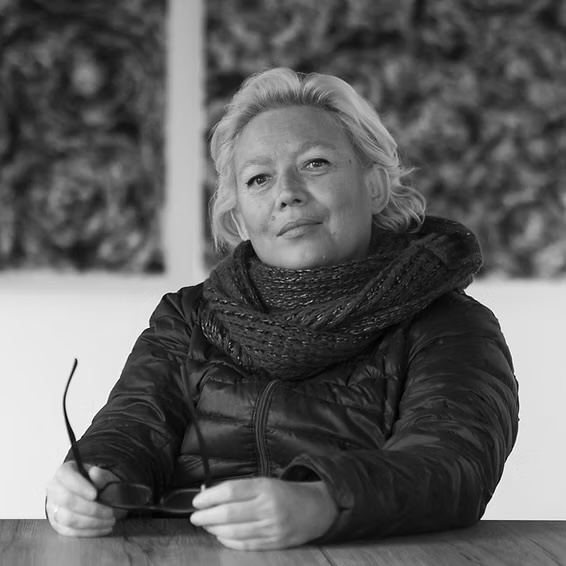
My guest today knows Rossella Vasta is an Italian artist whose work was at Lincoln center for years, honoring those we lost on 9 11.
She runs a school in her dad's villa where students learn to paint the way Leonardo da Vinci did, by doing, not just studying.
But here's what grabbed me. In 2009, something happened that left her paralyzed two months, couldn't move at all.
And she says that's when she learned the most important thing about life.
She loves this old saying, men make plans and God laughs.
After what she went through, she really gets it. Today we're talking about what happens when life takes away your control.
About teaching Americans to walk where St. Francis walked 800 years ago, and about finding beauty in the things we can't control.
Where are you today?
[00:01:12] Speaker B: I'm in my studio.
[00:01:16] Speaker A: In Italy.
[00:01:17] Speaker B: Yes, I'm in Italy. I'm in.
In Corano, which is near Perugia, actually. You were invited to come visit half. One time you come and. And this is. I will come, yes. This is my studio, which is very quiet. There is nobody here, just me.
You can see there is a painting of mine in the back.
[00:01:36] Speaker A: I just so enjoyed meeting you at the 911 memorial this year in New York.
[00:01:42] Speaker B: Yes.
[00:01:43] Speaker A: And watching the rehearsal and then also meeting that psychologist who came to your school.
[00:01:51] Speaker B: That is a Caroline Taylor. Caroline Taylor, she is a psychologist. She worked with the University of North Florida in Jacksonville, and she came all the way from Jacksonville to attend the Table of Silence.
And. And, yes, you know, that's. That I like. Because there is a mantra that all the people that come here, they refer. That is a healing place.
And that's, to me, is very important to offer an experience which is not just a touristic experience.
I mean, that's, I think, is probably the reason why I do all the work that I do, which is a lot.
[00:02:26] Speaker A: You do a lot. Because I was looking at. I mean, I knew you were an amazing artist, and I even looked into your accolades.
[00:02:34] Speaker B: You were.
[00:02:36] Speaker A: Oh, gosh. The Biennale in Florence.
You exhibited starting when you were 19.
[00:02:41] Speaker B: Yes.
Even earlier.
[00:02:44] Speaker A: Even earlier. Ah, okay.
You know, you run a school, a family business, you're an artist, and you run these. These amazing spiritual programs to show people the Franciscan path.
[00:02:58] Speaker B: Yes. Just recently we completed, after five years of working together with this theologian, a program on women saints in central Italy that has been very successful because women's sanctity is different from male sanctity. And so. And sometimes the women Are, you know, the other part of the main cent. You don't have many women that are founder of the order. You know, those, the male, the found the order and that is the female version. So that's. That's very interesting to see how, you know, they express a different way.
So this very successful program and the people left there is this theologian called Tami Vidrina that come from Louisiana and that she come every year.
And these here usually only women, but this time there were also some women bringing their husbands with them.
And so it was a very interesting experience to see how these men were resonated to that they did beautifully.
And so, yes, I think, you know, I think that artist and saint have something common.
They go through a different way. They. They choose a different way. You know, it's not the way that everybody choose to have, you know, that you respond to all the needs from outside. All the expectations come from outside.
I think sentient artists, as you know, true artists, I mean, you know, somebody like my friends, you know, like Nathan, that, you know, our common friend, you know, and my. And my New York generational friends, you know, we're all kids. So Barbara Rosa. So I mean, true friend, true artists that they, I think they express a different way. They don't do it for success, they don't do it for money. They do it to express, you know, something stronger.
[00:04:48] Speaker A: And I see that spiritual. I don't know what you want to call it. I'm calling it spiritual. But this spiritual thread runs through.
Yes, all of your friends.
I invite Nathan invited me to the Lincoln center this year to watch the rehearsal of the Table of Silence.
And it's an amazing thing you've been doing for 20. Yeah, 25 years.
[00:05:10] Speaker B: Well, you know.
[00:05:10] Speaker A: Okay, 25 years.
[00:05:11] Speaker B: Right. Okay. I have to specify that the choreography of the tableau of silence 9 11, that's the choreography created by very good friend Jacqueline Bolisi, who is one of greatest choreographer in the world. She has been the error. Marta Gramma, the first dancer Marta Gramma. And she's a great choreographer.
So the 911 ceremonial dance, so called Table of Silence is a project of Jacqueline Buizi. I'm not the one that designed the dance. And all of that in the collaboration with us, you know, that I've created in 2006.
I call it like a capture project where there are, Andrew, the big format plates with a technique that is called mezzo in goby, where in each one there is an image which is like a table with chairs waiting people to sit at this Table is an invitation to communion to Pisa. And I've called these Andre sculpture plates Tableau Silence. The reason why I call them table of silence is because I was in Germany, that when I had the idea of this plate, I was in Germany. I used to go to Maristad in Germany, which is a monastery of enclosure Cisterchen, where I have my studio. And whenever I can, I go there. It's my creative retreat.
And early morning, you know, at six, between five and six, I go there and there is the communion. There are only, you know, these 212 friar that they, you know, share the communion. But also there is this moment of the adoration.
So when nobody eat from the bread, they all sit and wait the divine to come in. And that's a different kind of banquet. And so you make space for the divine to come. Of course, I'm a Christian, but the idea of the table of silence is open to all religion, because the spirit is one, no matter from which story you arrive to death.
I envisioned the table of silence. And I have decided that this sculpture plate has to go through country where there will be a host preparing the table. For me.
I was working on three simple concepts, which is hospitality, silence and the banquet.
The plate represents the banquet where everybody's invited.
The silence is expressed through the color white. Because the white, to obtain the white, no color need to rise higher than the other.
So to be silent, we need to really, nobody raise the voice higher than anybody. Just silence to listen, to be open to listen. Now I'm talking, you're making silence for me, you're listening to me. But it's not just a verbal know least silence is also a mental silence. When you leave the person the possibility to express totally him or herself without any prejudgment.
That's why peace will only occur if we give space to the other to be entirely themselves.
And so white is the silence.
The banquet is the communion. The word companion from which comes the word friend is the one with whom you break the bread. So it's about really when the world are breaking the same bread.
Unfortunately, some have hold the bread and the other just a little bit. That's not correct. We want our peace until we can really share equally our resources.
And this is not a political speech, it's about humanity.
If there is somebody that suffer is not okay. We all suffer because we are participate to the same body. In Christianity we all want one body, which is also the concept of the entanglement. You know, we are entangled in one common field and hospitality. That's Very interesting the topic hospitality, Diane, that in Italian we have a word that define both the host and the guest, which is hospital.
Is the same word. Is the same word. I studied a bit languages and I didn't find any other language where we can call with the same word the host and the guest. But it tells a lot. Because a real hospitality is when there is an equalizer where everybody is aligned in the relationship. There is not one that is up and the other that goes down.
And we want a peace until we as human, we set ourselves in front of the other as a human being, despite whatever we believe defines you, which doesn't in the end. And so. So and the hospitality, the silence and the banquet. So silence to allow people to express themselves. Banquet for the sharing of. Of humanity.
And. And hospitality to me is that in the world we're all guests of each other.
So I mean, and how I envision in my project that this had to happen. I resisted to the intention to do the installation of these plates that let things to happen to these plates. Whatever country they go, there will be somebody that will install the table.
And so I started in Japan. There was a Japanese architect that installed the table. Then it was several venue.
But what happened? Through a common friend, Giannini, who is the costumist of Puglisidal Theater.
She wanted so badly me to meet Jacqueline. I think she must be a bit sensitive because really she made us meet. I was coming out from a severe problem of health. We were supposed to meet in 2009 and she came to Umbria, but I was in the hospital. And I will tell you later about that. So later on 2011, then we meet again in the summer.
And then, you know, we talk, you know, as you talk about what doing. And Jacqueline was really seeking to do, you know, the boy theater work with the same kind of philosophy of Martha Graham. You know, where dance is not just aesthetic, you know, it's more about an existential way to express.
To express humanity, to express important values. And as long as she was looking to do a site specific, you know, ceremonial dance to commemorate the victory of 9 11. I want to talk about the table of sales. Eventually we'll go to New York. I was thinking that maybe an artist was installing these big hundred plates, you know, and have so many friends artists in New York. And as she goes, like, wouldn't it great if can be a dancer, can it be a dancer? So that would be wonderful, because for me, each one of these plates represent a human being.
So she had the idea to design this beautiful choreography, which is called a table of silence, 9 11. To commemorate the victim of 9 11. And for her, I did a smaller version of the big plates to allow the dancer to carry the plate in their tunic and this way, in their dance, this plate became an offering. You see, there is this moment when the razor, you know, the plates up to heaven, is like an offering for peace and so on. To me, you know, if I would not set myself out from the installation of my plates, something so great would never happen, because there was no space for a great artist and choreographer like Jacqueline Boise to create this wonderful choreography that every time I go there, I cry because I. I think it went beyond anything that I thought of.
[00:13:06] Speaker A: Well, she obviously saw what you had started and went with it.
[00:13:12] Speaker B: Well, I've created something like a zest, you know, so the Temple of Salis was like a zest because I did this Andre sculpture play. They still go around in the world, you know, still there are installations that go around in the world where it's all the.
In Rome, at the Museum of the Apaches in Rome.
They are permanently now installed at Emergency that was created by Genostrada in Venice.
So there are so many venues that still go on for her. I did a smaller version of the plates that I donated together with the factory where I've realized this plate, which is Faustomie, that allow me to do all this work.
We have donated to Jacqueline Bujesida's theater to have them being displayed in the big. Around the fountain, there is this kind of black marble table, in a way, with the water inside, and they are displayed there as an invitation table. And then all the dancers carry their tunic.
And over here is.
[00:14:21] Speaker A: Yeah, well, for those listeners who've never seen it, I urge you to look at. There's a website where they can see the actual video of the dancers in front of Lincoln Center.
[00:14:31] Speaker B: They can go to Bujisi Dance Theater.
And then you write, table of silence. 9 11. There should be all the YouTube video of all these years. Of all these years.
[00:14:43] Speaker A: So amazing. Well, you got her attention.
And you're an artist in your own right. I don't want it to only be about dance because you're.
[00:14:53] Speaker B: I'm a painting.
[00:14:54] Speaker A: You've been in museums on three. Three continents. Yes, Three continents. Yes.
[00:14:59] Speaker B: Yes.
[00:14:59] Speaker A: You won first prize at the Biennale in Florence.
[00:15:02] Speaker B: Yes. For painting.
[00:15:04] Speaker A: And you had your first solo show when you were 19, right?
[00:15:08] Speaker B: Yes, it's true.
[00:15:09] Speaker A: And so. But. But. But you're such a humble person. I know you never like to talk like when I first met you, I had no idea how famous you were.
[00:15:17] Speaker B: I'm just like, I don't, I don't see myself.
[00:15:26] Speaker A: Yeah. And I, and I love when I, when I asked you about what your, what kind of philosophy do you follow? And I, and I, and you said, men make plans and God laughs. And I love that because you have this, you have this letting go philosophy that's maybe a lot of St. Francis, right? You want to talk a little bit about St Francis?
[00:15:47] Speaker B: This year is an 800 anniversary of St Francis, the foundation of the rule and many other things.
So, and so it's very important to talk about him. He's my buddy because he and Sinclair. Well, I grew up in a land where, you know, you cannot talk about St. Francis. It's impossible. But my spirituality is very linked to Francis because first of all, Francis was an artist.
Francis was a poet. Even if you don't believe is a insanity. So you don't believe.
Be a saint. Well, he's a poet. He's the first poet in the Italian language before Dante. He used the Italian language and literature.
In fact, Dante gave a big position, you know, to St. Francis in his Divine Comedy. To live the sanctity through creativity I think is very interesting. You know, we have a very interesting figure in the Middle Ages, he and Il de Garcon Bingen that live their sanctity through creativity.
Well, for him, the Virgin Mary is a very creative symbol, is like, you know, the cloister garden, where everything is there and fertile.
For Hildegard, for Mingan, there is the viriditas, which is this kind of principle that exists in everything is alive.
And Hildegard von Bingen, in this hundred years before, Francis said that we resemble God in our creativity because he's a creator. And through our creativity we get closer to that divine aspect which is in us. And I think Francis, a hundred years later is really expressing the same idea of going through poetry and creativity through God.
And I think what is very interesting in Francis, his idea of humility, which I always say there is different between modesty and humility.
I used to say, I'm not modest, I'm humble. Because the modest, you know, is the one that's like low key things like that, you know, just which is not really exactly what is humility.
Modest come from Latin admodum.
So it's like the bourgeois moral, you know, just I need to behave the way the others expect me to behave.
Humility come from hummus, which is a fertilized land.
So I'M at the same level of the land, so I don't raise me higher than anything. But because I'm the level of the land, I can embrace all these hummus, all these fertilized hand that nourish my creativity.
I really think that artists, the more they're humble, the more they're creative.
They often artists, when they are too pride of themselves, they stop being creative. And so I believe that this trace of humility in Francis to be at the level of the earth, to let be fertilized from nature because we are natural, is very important. And another aspect that I like of Francis is the idea of leadership.
Because think about that, Diane. When Francis decided to join a religious order, he had not to create his own order. He could go to order already existing, you know, like Benedictes, you know, other order that were already existing at the time.
Why he had to find his own order?
Well, the reason why he found his own order because all the other orders, for instance the Benedictines, they were having an idea of leadership as a pyramid.
They are called monastery.
And once you enter the monastery, you stay there until the rest of your life. So you don't move around.
And then once you are the prior, which is like, you know, the head of the organization, you retire as a prior, you don't go back to be a simple monk or friar.
St. Francis stated that everybody in his organization has to have an experience of leadership of, you know, the, the good. How you say pastore, you know, Christ is the one that lead the sheeps and the shepherd. Yeah, the shepherd. Okay, I was looking for this word, the shepherd. Okay. The shepherd is the custodian.
The shepherd is the one that custodire, you know, means to take care. They take care of the shepherd. And so he is in service of the people that he guide. So a different kind of leadership is custodians, not prior.
Also, Francis stated that every one of his friar, they have to have a position of leadership.
But then they have to become.
To go back to be simple friar is a brotherhood.
So this idea of brotherhood is crucial in Francis, because even he wrote this beautiful poem which is the canticle of the creatures.
Or he calls brother and sister. Everything that exists in creation once war, you know, is like a pre definition of entanglement, you know, quantum physics, which inspired me a lot, you know. But all my next work are about the entanglement. It's an exhibition of drawing going around to museum in Spain. It was exhibited at the museum Antonio Perez in Cuenca. There are like 50 works inspired to this subject of entanglement as like a visualize. All these invisible strings that connect everything with everything.
And that means that we are all one. We're all unified. You know, that's like. It's a quantum field body where everything is unified. Rachel Van Selet that in thanks for Thanksgiving she will project on the big billboard group of people that were invited to work on the idea of Look Up. Our friend Nathan Rukis will also be on one that will be there.
[00:21:56] Speaker A: It's Rosella. This is more than just any billboard. This is Times Square.
[00:22:00] Speaker B: This is Times Square. This Times Square on Thanksgiving. And so the fact is, on Times Square on Thanksgiving, I think is very important. And look up is. And the idea of Rachel is about that whenever, you know, we struggle for anything, then we look up. We look to something which is higher and beyond.
And for her, I posted this image of these huge entanglement drawings like 3 meter with the music of interesting friend composer Italian one Fabrizio de Rosira.
And. And it's about the fact that we look up, we look inside, and we look inside, we look up, we think, we look up. But in the end, you know, when we look inside, we look up because we are all in the same field.
That's very interesting to think that we are part of something that is bigger than us, but is in us. We are in it. It's all entangled. And to me, this concept of entanglement and quantum physics is very inspirational and very spiritual at the same. At the same way.
[00:23:10] Speaker A: I love that I always thought of entanglement as being a negative concept. You know, you get entangled in somebody's drama, you get entangled in their lives and they can. And life gets complicated, you know?
[00:23:23] Speaker B: I know, I know. Don't tell me. Sometimes I want to be in an Armitage.
Because, you know, speaking about the tableau, silence, whenever you use words, you can hurt somebody, somebody can overreact. Then you enter into people life drama. And then you become dramatic, even if you want the drama. So words sometimes, you know, just entangle your situation.
So silence is very important. Einstein observed. Einstein observed that it will shoot two particles from the same source at a huge distance, one from another.
When one has a specific behavior like 1, 2 spin or something like that, the other at the same time. At the same time at a speed which is higher than the speed of the light. At the same time exactly as the same behavior, so advance that there are invisible strings that link everything with everything.
We are all connected. That's the entanglement. We are entangled. We are all at one.
[00:24:28] Speaker A: I was going to ask you in terms of entanglement because you are on the faculty of your school in Umbria, right?
[00:24:34] Speaker B: It's a family business. It's not a school in terms that we have a professor that come every day. It's a school that since the year 2000 was program from American universities.
So the university come here for a period from a minimum of one week to a maximum of three months.
And originally we had a three month program with Montana State University.
So they get credit not from us, but from the university whose program we host for a period.
And we work with them to co create the program site specific for them.
So depending from their needs and what they aim, then we co design the program with them for all that we know and for all the connection that we have in the territory. Sometime I teach some programs, I would say like more teaching because teaching is more. I would say academic or things like that I share. I would say I have a degree in philosophy and, and. And a PhD, honorary PhD from a Franciscan university that was in Milwaukee at the time.
And so I share with the group the knowledge that I have and the places that I have. Just recently I did run two pilgrimages. One from Milwaukee, interesting spiritual center, which is the Christine Center. It was founded by this nun who passed away, was a Franciscan nun. This is a spiritual center that is inspired to Franciscan value. And then I had another program, Women Saints that just ended, you know, a week ago.
And about following all this. So this. There are certain things that I do directly or also I have a wonderful tour guide and friend that she, she ran a lot of these programs. I.
Because you know, I cannot do everything and I don't want to do everything, even if I do a lot.
But very often those friends that know me, they're interested in the spirituality. Sometimes they ask me to run personally and co design the program.
Anyways, a lot of work I do it because to me is a way to express my spirituality and share what is very important to me as to me art and spirituality are the reason why I am in this world.
[00:27:09] Speaker A: I love that.
So you teach.
This is a place where Americans come to walk the path that St. Francis walked 800 years ago, right?
[00:27:18] Speaker B: Yes, yes, yes, yes, yes.
[00:27:22] Speaker A: And you walk along with them and share what you know.
[00:27:25] Speaker B: Yes.
What is very nice that for many of them became like a healing place because people feel it easy when they're here. They can be totally themselves and there is a sense of community.
United States people usually are very Tense, because we, as Italians, we are more open. We allow to show our weakness with our friends. We talk of our problems. That's okay in our culture. We hug each other.
These. You know, there's not all these sexual paranoia. You know, friends, whole dance. You know, there is a lot of warm and sharing that there is not much in the American culture. So when they come here, they feel relaxed. They feel, oh, this can. Can be real. This can be done. So it's not only about following the path of St. Francis. It's about being in a place when you can really live the moment of the experience, even eating a meal and be present and be present, you know, not be always next. You know, schedule this and that to be present. I think that's very important. It's very hard nowadays to be present.
[00:28:36] Speaker A: Well, the psychologist I met at the rehearsal at Lincoln center said that it was transformative.
[00:28:43] Speaker B: And she's incredible. And she's coming with a group this Monday. This coming Monday.
Yeah, yeah, she's coming. Yes. And in fact. Yeah, yeah, yeah. And she brings adults, you know, because, you know, adults, people that are going to. To age.
And you need to remotivate them for the last part of your life. That can be as rich as the first part of your life. Just different new purpose in life, you know, curiosity, all these things that can. Can help the human being.
[00:29:22] Speaker A: You've mentioned before that at some point in 2009, you had trouble moving and you went through a really difficult time. But you said you learned a lot from it.
[00:29:31] Speaker B: Yes.
[00:29:32] Speaker A: Is that something you'd like to talk about?
[00:29:33] Speaker B: Yes, of course. You know, I even wrote a book. This is the book Interruptio.
They come from the Latin root of interruption that you have in English.
And.
And then 2009, I was all in a sudden paralyzed, and I couldn't move anymore. I mean, this part of the body was completely not existing. I could cut myself, I could burn myself and not a body.
The most difficult part was that there was no more contact my feet with the earth.
You know, we don't realize when we say we're grounded because you walk and you feel, you know, whatever surface is under your feet, if you're on grass, if you are, you know, walking on a street, we don't think we naturally, but we are connected. And I felt completely disconnected from hurt. You know, just. I just had only a body from here to here. That's it.
And really, that was.
Was very odd experience.
But, you know, I mean, nowadays, little problems, sometimes they make me angry. I try not to get angry. Easily. But sometimes, you know, sometimes I get nervous. But in that moment, we had a lot of reasons to panic or to think, why me? You know, people wonder that why me? You know, like just.
Or react or just.
I was so much in peace that I think I was in a state of grace because it's impossible that somebody with that prognosis can react that way.
I remember that when this surgeon, a great surgeon, that then, you know, he was one of the best neurosurgeon in Europe, Andreoli, that then, you know, few years later retired. So thank God he was there when I went on surgery.
He very seriously told me that I was going probably to be paralyzed for the rest of my life and that he was trying.
I had a tumor on my spinal fluid that does compress my spinal fluid brought to necrosis.
So it was dead. So we had no clue that this could regain life.
Plus, it was pretty sure that there was cancer. And, you know, that nobody survived at cancer at the spinal fluid.
That's impossible because.
So. And I have this verdict and I stay still and the Smiley team and they tell me, well, you are the best surgeon. And you know what, if this doesn't work, we all take the train and we go to Lourdes.
I, you know, and they look at me like.
But just probably saw a lot of women that in situation like that were crying or in despair.
And I stay. Yeah. Calm all the rest of that. So there was Marcella. What's.
[00:32:45] Speaker A: What's in Lourdes? I mean, I know there's a cathedral there, but.
[00:32:49] Speaker B: Right.
[00:32:49] Speaker A: Is it the. Is that where you said if. If it doesn't work, you'll take the train to Lourdes?
[00:32:54] Speaker B: Yes. Lourdes is a sanctuary where there was.
Where the Virgin Mary appeared.
And there is a water where over the centuries there occurred a lot of miracles, miraculous water.
So just to say, if this didn't work, we can still have a miracle.
There was a bit of a joke, but at the same time, not completely and means that inside of myself there was a voice that was telling me, you're not going to be paralyzed for the rest of your life.
I felt that to go through this experience as I needed to understand what is the cross.
Because I'm a Christian, it's very easy for me to get the Virgin Mary. She's a mother. We all have a spiritual mother. And thank God I have a spirit of a good mother.
And so that's easy to get that. But to get Christ and the cross, that was for me, something even I believe, of course, in Christ. But to feel it. To feel it. And, you know, on Good Friday, I knew I had a tumor and I had to go on surgery and I went on surgery on the period of Easter.
So I felt they had to go through that.
And also, you know, they put, they. They put nails on my spine to check the spine before the surgery. And they were really hammering this, this nail and they put here all these things that was bleeding to check how much signal was from the head to the body.
So, you know, I went through my home cover in a way, and I went through that, accepting it and believing in the time that there was a blessing, that Christ was blessing me through having me experience that path. And there was so much in peace.
I was giving a lot of hope to the people that were, you know, was in this room of the hospital with other four people. And that was so funny, Diana. I was so hilarious.
Instead of being despair, you know, I was a comic. You know, people were laughing with me the whole day. Somebody was coming to visit me on the corridor. The, the nurses were saying, you go in the corridor when you hear everybody laughing, there is Rosella. There was not much to laugh at that time. But that was the most hilarious period of my life.
So I think I was in a state, state of grace. And it taught me to release control the way they said, men make plan and God love when, you know, I was thinking I was in one direction and then only a sudden, you know, I get paralyzed. You know, the. The previous month I was in Madrid. You see that I sent you this photo of me and Barbara Rosa as a photo portrait.
That was the exhibition that I had in. In Madrid few months before being paralyzed.
And that was. Yes. There was a guest of Barbara Ross that she curated my solo show in this gallery Binomial, that was a gallery that was active these years.
And few months later, I was paralyzed.
[00:36:17] Speaker A: Can you explain who Barbara Rose can you explain who Barbara Rose is to our listeners who might not? No. You were part of her family, right? You were part of her creative family.
[00:36:27] Speaker B: That's how I met Nathan Brukis and all these artists friends that I have in New York. Because. Okay, Barbara Rose, first of all, Barbara Rose is one of most important art critic, art historian and scholar in the world.
In the world. Wow. She was the one that wrote a book about American art since 1900.
On the first half of 1900, there wasn't a text that could explain what was going on. So she wrote this text. The maker famous was translated in many languages.
The second aspect was Frank Stella among you know was that recently also passed away. Barbara Ross passed away in 2020.
So. And she taught us at American University Art History.
And that's when I met all these artists like Nathan Brukis.
Z is like. He has a kind of Novanic name. We call him Z and Randy Stolfuss and many others.
And then I lived in New York. She gave me the key of her apartment in New York. And I was with all these artist friends. Then we did an exhibition altogether in Perugia called New York New Generation. I put everybody on a madhouse. You have to ask Nathan about this story. We have a diesel story.
There was a next madhouse when there were like maybe 20, you know, people still living there. Mads.
And it was fun. And then. And then there were studios and they put them to sleep to work. And then we exhibited. We have exhibited all together in Palazzo della Pena. That the TIA was becoming museum Modern and Contemporary art.
So there was a big event. I also wrote a diary about that there will. I will publish next year, hopefully. And yes. So Barbara Rosa and Barbara Ross curated that exhibition, the New York Generation exhibition as well.
So Barbara Ross had a house in Todi and then she lived here. She lived in Madrid, she lived in New York.
I mean, she's the one that conceptualized minimal art.
She gave the name of minimal art with abc.
So very, very. Yeah, that's big. That's big. You people can go on wiki. You find a lot on Barbara Rose. But for us was a mentor was because she had an amazing relationship with the artist that she loved. She understood the artist. And we are almost their family. You know, me, Nathan Z, Randy. Then there is also Mark, Heather. Just a whole community of artists that she brought together also in Italy, like Bruciacomelli and Arturo Casanova. I mean, she really is like a mother to us. So we have a community that is always in touch. Is always in touch. And she has been very important in our life. She curated this.
She curated this exhibition Painting after postmodernism in 2018, two years before dying.
That was about the importance of painting nowadays.
[00:39:43] Speaker A: So what was the number one thing she said to you that stuck with you?
[00:39:47] Speaker B: Well, you know, she.
The thing that really strike me that when she met me, I think was 17, okay.
And as she came visit my worker here in Perugia, she was leaving Toddy and we went with my mom to get her here. I was not driving at 17.
And she saw this painting that I painted. I was 15.
And you know, my father, who passed away in 2022. I adore he was not so happy for me to be an artist because, you know, I was a businessman, a trainer, and just, you know, everybody think the artist would be a starving artist. That was the future. So I was never encouraging me, you know, in my heart. And Barbara was very important because she told my dad, you have to let her do whatever, you know, she feel like because she's an artist. And for him, Barbara Rose, you know, she's an artist, you know, that was huge. And then, you know, when she saw the. The first painting that are in the red launch, they never wanted to sell. People wanted to buy them. And I want to sell this very, very first work.
And then she. Next day she called me and she said that she didn't sleep the whole night well, because she thought I was a genius. Well, you know, I don't think I'm a genius. But to have Barbara Rose to say something like that, and you are younger, give you the strength to say, to keep going and to believe in what you are doing.
And for her, she never was telling the artist what to do. You know, she was really listening to the artist coming to the studio and having this amazing conversation. And we all miss her, you know. She also introduced me to Dan Kaiser, because Dan Camps at the time was the director of this art department at American University, where he was also teaching painting, that he has hired Barbara for art history to teach art history. And who was the one that flew me to United States for the first time to give a lecture about Italian art. And that's when I met Nathan Z and Randy. So. And we've done Kimes. We've been collaborating many years, and now we have a program of residency. It is called Achieve Residency. They come every year. We have three sessions per year.
[00:42:05] Speaker A: And did you get him listening to the Hildegard van Bingen Gregorian chants when he was there, by any chance?
[00:42:11] Speaker B: Yes, yes, I. I always listen the music. Well, people know. They come to my studio and very often I start the Hildegard from music. I always listen to that music. Sometime I do some acoustic. I call them acoustic bath. In order to make studies that Gregorian they have. Those vibes are very good for your body. We. We are all resonance. Okay? We are. We are. We are crossed by sounds. But the Gregorian are the very best powerful music.
And sometime before painting, I live in the space to clean the space. I only create how the huge state of peace.
Even my work is very energetic.
But always start creating from an inner state of peace. To me, peace is crucial.
[00:43:00] Speaker A: Where did you discover Gregorian chant? You Spent some time in Germany, right?
[00:43:05] Speaker B: Yes.
[00:43:07] Speaker A: Is that where you were in a monastery and you did some art there, in the monastery?
[00:43:11] Speaker B: Can you talk about that a little bit? I guess in New York when we met, it was not easy for me.
When I came back, I had so much work and I couldn't really relax. But I was glad. And I was glad that I met you, Diana.
And so it's not easy for me to live, but when I can, I go for at least a month to this incredible place which is close to Cologne. Okay. It's in the forest and it's called Marienstadt is a Cistercian monastery.
And they have to respect silence there. So really it's a place where I can recollect myself. And even if I'm a person that is very vivacious and I love people. I love people, but I need also to have a long period with myself where I need to talk to anybody. And that can be my studio. So there is wonderful. Because you know, I really am just with myself. The monks, which are now is like a community of friends, but I respect their silence, they respect my silence.
And I really spend a long period in silence and creativity and prayer there. And I miss. And I miss that dimension. I miss that.
Wow.
[00:44:29] Speaker A: So I guess you don't get a lot of silence in the building you're in now. Now explain the place that you're in. This is a family house, right?
[00:44:38] Speaker B: Yes, this is a family business. The family business. We are in front of a castle of 13th century. We are below a very beautiful village. It's called Corciano, which is from the Middle ages.
And we have all this facility which is composed from a 17th century country house with 20 rooms where we host our guest, a big congress center and an old villa. And we have a chapel in the villa too, so that is consecrated.
And we have a big park with. With cypress trees.
You need to come visit.
[00:45:15] Speaker A: You can feel connected to 800 years ago being there.
[00:45:17] Speaker B: Yes, yes. And we also are very foodie people.
We love food, we love to cook.
[00:45:25] Speaker A: So how. What's that? What's that like? Because I did. I looked at what your. Your siblings do. You have a brother? You have brothers?
[00:45:32] Speaker B: A four brother. I have four brothers, I have a twin brother. And they're all high tech geniuses. Okay? Not like me. I was really sure we'll be able to do that. Will it work? You know, just even for this simple thing, I was panicking. So I'm not high tech at all. So my twin brother is high tech. And he really had created all these high tech system at this transportation company initially.
And then I have a Filippo who has one year less than I.
He speaks five languages, is a business trainer and a business consultant.
But a very high tech one because he also uses artificial intelligence. But he used artificial intelligence many years before that. Now everybody speak about. They even wrote a book about artificial intelligence in Italian. Now when it will translate into English, I will send to you and create models.
[00:46:30] Speaker A: Mm Rosella. I read that it was the first Italian book on video.
[00:46:36] Speaker B: This is Davide, this is the youngest. This is the youngest.
This is Filippo. Then. Then there is. There is Angelo that lives in Wisconsin, lives in USA and he is a executive director of high tech company in Wisconsin. And I, I used to say is my sister because I have no sisters. And you know, usually brothers they call you when they need something. You never. Oh, I just wanted to talk to you, how you're doing. Will you go shopping with me? Would you like. Don't. So the only one I can talk to as you talk to a sister is my brother Angelo. He is, I love all of my brother, but he's the most sensitive. He embrace, you know, that part that usually belong to women of sensitivity, caring.
So I just spoke to him today and yes, I miss Angelo a lot. And then there is David. David is the youngest, but you have to understand that my mother was like, you know, Bunny. They do a lot of kids all at once.
So from me and my twin brother and the youngest brother, there are seven years difference. So my mother made the kid one after the other.
So the youngest is not that young either because he's past 50 and he is a very renowned Italian video maker and he wrote a lot of books, among which, you know, I become video making. Yeah.
My father has degree in law and then he moved to Roma because he studied business and he was a business consultant and then he was hired the general director with Tony Perugina and then he was went back into consultancy. That's why initially the school started as a school for consultancy, business school. And then in the year 2000 became more like, you know, university containers in a way.
My.
My father acquired this property in 1980.
[00:48:40] Speaker A: So what's a typical dish that you guys serve?
[00:48:45] Speaker B: Well, you know, we have a combination of Sicilian recipes and Umbrian recipes.
So you can have one day like a spicone siciliano, which is a typical Sicilian pizza, and another day you can have a rosto misto, like, you know, a mix of roasted kind of meat. In Umbria, very famous is pork Meat and sausages and cold cut are very special here. Like, you know, pasta norcina, which is a typical, you know, pasta with sausages that we cook here in Umbria. So we can have a variety of things. Yes.
[00:49:22] Speaker A: So what would your dad say about your school today?
[00:49:27] Speaker B: My father was very proud of me in the end of his life.
I.
I work very, very hard.
And one day I told him, dad, I'm not doing a beautiful life, because really I hold a lot.
And then he said, no, but your life is beautiful.
It's different to make a beautiful life. And to say your life is beautiful.
What you say your life is beautiful means that there is beauty in your life. And the beauty are all the beautiful people that I meet, all the beautiful experience that I'm able to donate, all the good that happened in my life. Of course, sometimes in your life also often things that are not completely beautiful or completely as you would like.
But I have to say that in my life there is more beauty. Who said, in my life there is a lot of beautiful people?
[00:50:21] Speaker A: But yeah, the people make your life beautiful.
[00:50:24] Speaker B: I think that we are all entangled and.
And I think we are all connected. Even these. These two groups, you know, that I had.
I mean, they were such beautiful souls that you create all these beautiful energy that is. Or entangled. I think that the energy that we exchange is very important and doesn't mean that it's always like that. Also life, you can find moment of tension.
But I have to say that most of the time I have beautiful people and beautiful experience in my life is the divine love that come to your life and give you peace. That's for sure. This is the book that I wrote together with others. Maybe that's nice to talk a little bit about that, because with my friend Dan Kimes, the artist Dan Kimes, that was also the director of the American Universe that still teaches painting there.
He came that summer after my surgery. He was talking about something that happened in his life.
He had a flood in his house and he lost a lot of documents, painting photos. And he got depressed because we don't realize that we. Our memory, we carry our memory with all the belongings that we have.
The object, the photo, you know, we get rid of all of that.
What is our path? Just we don't realize how much we are belonging to our belonging.
We carry them.
And so for him was like all of his life was raised and he lost also his painting. All these drawing and all these memories with important people was devastating.
And then slowly by slowly, he was taking all These pieces of photo and reassemble them like a puzzle and doing a new work about that.
And from that crisis, it became a new way of doing art.
That is what he's doing now. That opened a new door to his creativity.
This book came out in our dialogue. There is a phrase from Thoreau, this American philosopher, that state that every creative event that ever happened in the world has been an interruption unexpected, not planned. For the only persons, the only people that ever can reach any interesting place are those one that lost themselves.
They lost themselves.
So an interruption is a moment where you lose yourself. When you lose, your path is interrupted.
And then you know it can turn into a crisis, but also it can turn into an opportunity.
And then you see things alive in a different way because of that interruption. And then we decided to accompany our group show, Me and Dim, exhibiting at the gallery of Giuliana d' Orazio in Toddy. She was the wife of Piero d', Orazio, prominent Italian artist. She had a very important gallery in Toddy. And so we had this exhibition together. And instead of having a catalog, we accompany our exhibition with a book where there are five stories from Americans and from stories from Italians about the stories of interruption or something else to deal with that.
And I started translating the book into English. Actually some parts are ready in English because they are from American France. But I had no time to complete it. At a certain moment, I know I will, I will have an English version because including Dan Camps, we have many people that rob there. So life is.
You go with the flow.
[00:54:14] Speaker A: I was going to ask you one question.
What's one thing that Americans don't understand about Italian culture?
Because when I looked at your website, you have that page about savoir vivre.
[00:54:28] Speaker B: Yes. Well, I believe that it's not only Americans. I think Americans are more the. The emblem of a contemporary life. Okay. But it's something that is also in contemporary life in general, mostly in America, because American is leading our planet in a way.
And Americans need to schedule everything.
You need to schedule everything. Just you need to plan a schedule.
And there are certain things that you need to.
To relax, to let. To go with the flow. There is a.
What I said just mimic plan. And God love doesn't mean that don't make plan. Because to direct the school that Aust Americans, I need to be a great organizer. Okay, but let's put like that. Sometimes I make space for things to happen.
I make space for things to happen. So even when I do a program, I schedule everything, but I Let space for plan to change a little bit so that something can happen or like wait a moment is better than another one. So not to be too close into that schedule and to be a bit open and to live the moment to enjoy the company of your friend. To spend more time in a meal and sit the table sometime for a couple hours.
This think of letters things go in a way not be too tense to scheduling everything to be not too much controlling. I think big problem people in life like they are very controlling. And after my problem, my health problem, I understood that I have to release control doesn't mean that don't do a lot of things because I work very hard and I need to plan a lot of things and organize things. So I have to.
But I try not to be too compressed from that. To leave the space inside of freedom and, and know that I cannot control life and nobody can control my life.
That's the real thing.
[00:56:38] Speaker A: Wow, that's really hard when you're entangled.
[00:56:41] Speaker B: I know, you're right. That's a good point. In fact, in fact, you're right because you know, you know, sometimes, Diane, I tell myself, I would love to be on an Hermitage alone because, you know, we are entangled up to. You're taken to all places and dramas, people and things like that. So it's not easy. It's not easy. And I'm a person that like to have harmony. And when this harmony is broken, I, I, I suffer because I don't like conflicts even in life. Sometime it happen, but I hate conflict. Yeah.
[00:57:14] Speaker A: Well, maybe art is a great way to deal with that.
[00:57:18] Speaker B: Oh yes. When I'm in my studio, I'm alone with the museuminghe nobody ever saw me painting. I cannot paint in front of anybody.
So that's my place, that's my space and that's my cathedral, my personal cathedral.
[00:57:33] Speaker A: So much art is chaos. They depict chaos, they depict fights, they depict the tension in society. So without that, they wouldn't be anything to paint, right?
[00:57:46] Speaker B: Well, I would say to me, the challenge of art is going from chaos to order, from chaos to order. Especially my series of entanglement. If you see this drawing that all these strings that entangle, but then you see the disharmony in a way, and we are in continual balance. So I always try to bring order into chaos and not to let chaos killed me.
[00:58:10] Speaker A: I was intrigued about Mary as a role in Italian culture.
There's a movie that I really like called what's the one where the woman gets a divorce and she goes to Tuscany and she buys a villa.
[00:58:28] Speaker B: Under Tuscan son. Yeah, yeah, yeah, yeah.
[00:58:32] Speaker A: And there's a scene where she's polishing the Virgin Mary. She's almost praying to the Virgin Mary. Is that something that Italians do?
[00:58:40] Speaker B: Well, you know, those ones that are Christian, they have a huge devotion to the Virgin Mary. There is a huge devotion to the Virgin Mary because, you know, the Virgin Mary, first of all, is one of the richest archetypes. If you only think there are 47 names that define the Virgin Mary in the litany. I mean, the litany, you know, and the other of this prayer, the rosary, there are 47, among which there is a name of the Virgin Mary as the door, the door to heaven.
Very powerful. Plus is the mother. And we, as Italian, we are very attached to our mother. You know, mother and son and daughter is very strong link in Italy. And also she's also the woman of peace during the second war. The Virgin Mary was trying to protect us from the war.
We need her now more than ever. You might believe or not in her being the mother of God.
For sure. She was a great example as a woman for all of us, there is not a great archetype than the mother. The mother is nourishing, welcoming, understanding, giving. The language, we learn the language for our mother. You know, that's the role of the mother is the most powerful role. And if we as women, we understand that we have that power in caring, that's really. I think that's there. There, I think, lies in our power in being like a mother.
[01:00:13] Speaker A: Well, and your mom, her name is Benedetta, right?
[01:00:17] Speaker B: Benedetta. My mom is Benedetta. She's the mother of five children.
She will be 90 next year. And she doesn't look that their age. I mean, she's amazing.
[01:00:27] Speaker A: She.
[01:00:27] Speaker B: You meet her, you know, she has. She's very strong. She's a beautiful voice. She's always active, she's always thinking. She memorized everything.
I mean, she's amazing.
[01:00:37] Speaker A: What was her role in you becoming an artist and running this school and this business?
[01:00:42] Speaker B: Well, my mother.
Yeah, my mother allow all of us as a kids to express our creativity.
Not only she allowed, but she promoted it.
So she was the one that, since I was very, very young and I was painting, she was framing my drawing because I think that for all human being, especially the artists, they are very fragile. They need to have somebody in their life that tell them it's okay, you can do it.
[01:01:11] Speaker A: So at the school, whether they come to a residency or they come as a program through a University or if they just want to come. And there's different types of art people can learn to paint. Like Leonardo da Vinci. Right.
[01:01:27] Speaker B: With you.
I don't teach directly. I never wanted to teach Alta, but I have a professor that can teach that. Yes, yes, yes.
[01:01:37] Speaker A: And then there's sculpture.
What other types of arts they can do?
[01:01:41] Speaker B: Well, they can do. You know, when they come here for residency, they can paint, they can write, they can do sculpture, they can do all sorts of creative things. Yes. And sometimes they come here and they want to learn how to do fresco. And I have an artist friend that does fresco, as you were doing in the past, following Bellini recipes.
So they can do that?
They can learn that. Yes. Amazing.
[01:02:05] Speaker A: And you even have a movie studio, a film studio there.
[01:02:09] Speaker B: Well, you know what? And I'm seeking towards trying to attract a film program because that's perfect place.
And that. That's my wish. That's my wish.
This is a container where everything can be done.
[01:02:25] Speaker A: Thank you so much for your time. Rosella.
[01:02:27] Speaker B: It's been a pleasure.
[01:02:29] Speaker A: It's been a pleasure, too.
[01:02:31] Speaker B: Ciao, Carol.
[01:02:32] Speaker A: Talk to you soon. Ciao, Rosella.
[01:02:34] Speaker B: Ciao. Ciao.
[01:02:35] Speaker A: Before we wrap up, I'd like to thank Oliver Kuiker for the jingle and Gwendolyn Christian for the backup support.
Also, a quick reminder, these interviews are not a substitute for professional medical, legal, or psychological advice. Always consult with a qualified professional for any major decisions in your life.
And thanks for joining me in exploring the connections that make us human and learning insights and strategies to help us build, heal, and nurture relationships, including, and especially the the one with yourself. It's been an honor to share this time with you and to bring you conversations with some of the brightest minds who deserve more recognition. Remember, life's too short to take too seriously, so don't forget to hit that subscribe button, get outside, and let's continue this journey of life together.
See you next time, Sam.